The peacock is the most reinvented motif in Indian Jewellery because it offers endless interpretations. Search trends for peacock earrings have not plateaued — they keep climbing, year after year, across every region and every style category. That is not the behaviour of a motif riding a trend cycle. It is the behaviour of a design that has figured out something most jewellery hasn’t: how to stay relevant by refusing to stay the same.
The peacock appears in temple architecture, bridal sets, contemporary studs, sculptural drops, and enamel-finished gold pieces. It exists across 22KT heritage designs and 18KT diamond-and-gemstone contemporary collections simultaneously. Most motifs have to choose a lane. The peacock occupies all of them — and that breadth is precisely why peacock design earrings remain one of the most searched jewellery categories in India regardless of the season, the trend, or the occasion.
From Temple Carvings to Today’s Studs: A Quick Design Timeline
The peacock’s presence in South Indian temple architecture — carved into gopurams, painted onto mandapam ceilings — is where its jewellery life begins. Temple dancers wore peacock-motif earrings and headpieces as expressions of both devotion and artistry, and the motif moved naturally from sacred architecture into bridal and ceremonial jewellery.
Why the Motif Survived Every Jewellery Trend Cycle
Traditional Indian peacock earrings survived because the motif was never locked into a single material or technique. In Rajasthan, it became meenakari — enamel work echoing the peacock’s iridescent blues and greens. In Bengal, filigree translated into delicate line work. In South India, it lived in temple gold. Each regional interpretation kept the design alive in a new form, which is why peacock jhumka earrings from a century ago and a minimalist peacock stud from this year can both feel entirely appropriate. The motif has always been adaptable. That is its enduring quality.
The Same Peacock, Five Different Earrings
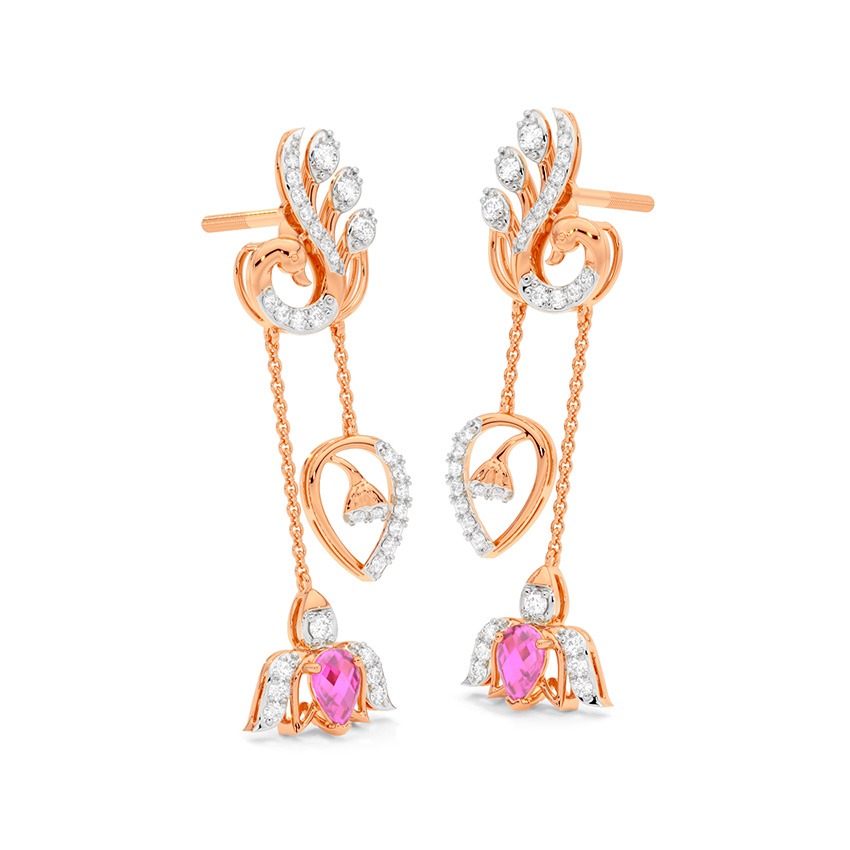
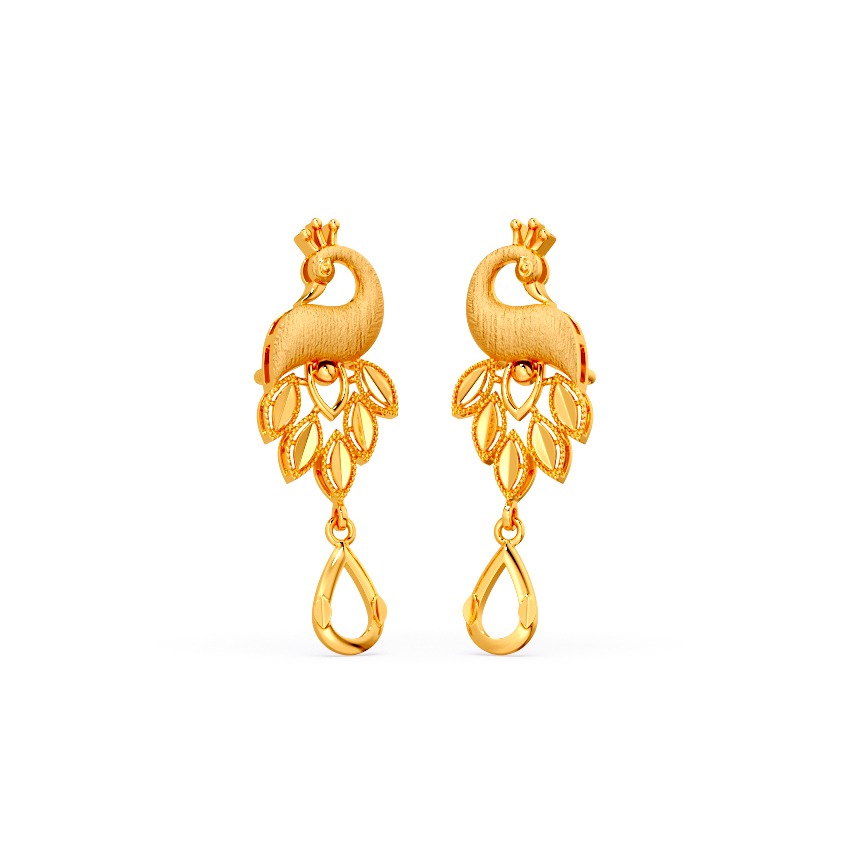
What makes peacock earrings remarkable is how completely the same source motif translates across different earring formats — each one reaching a different buyer without any of them feeling like a compromise.
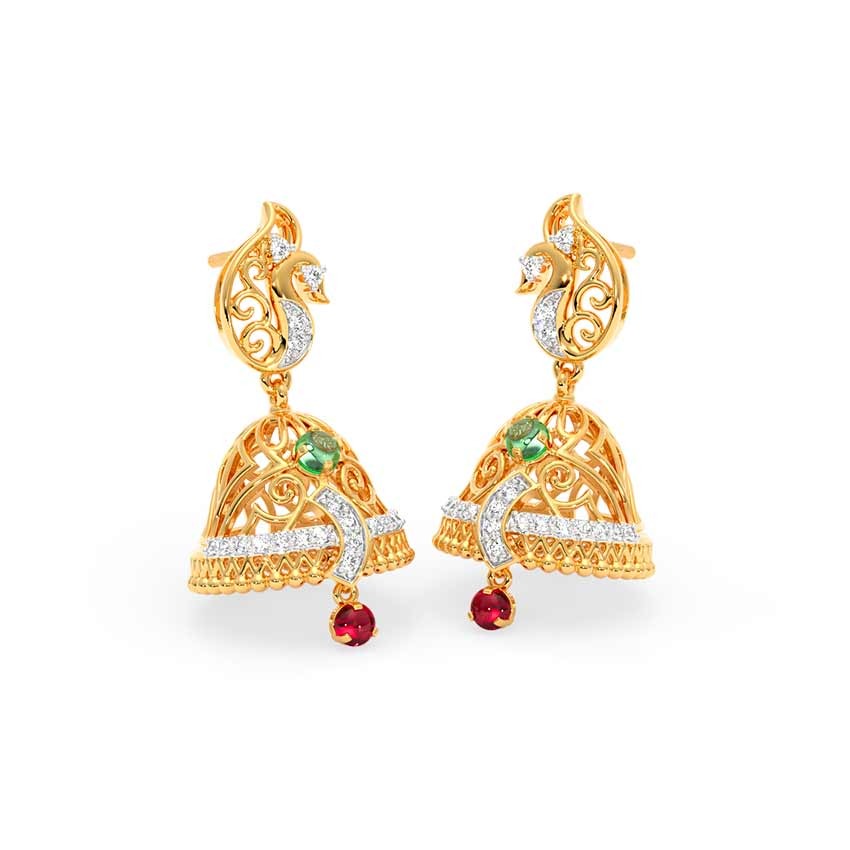
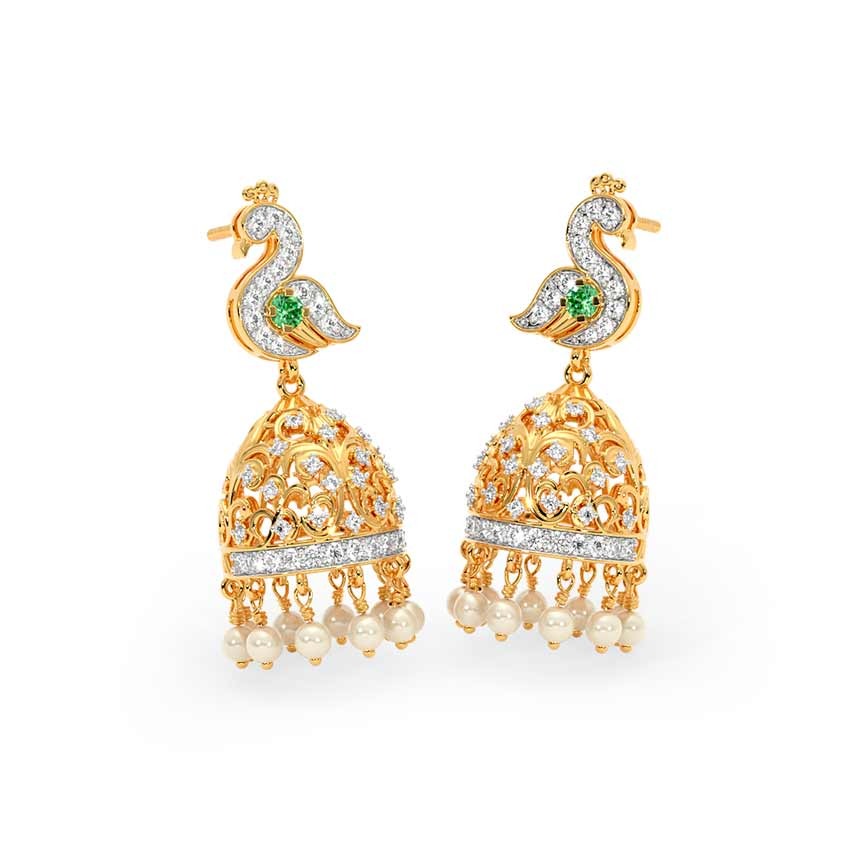
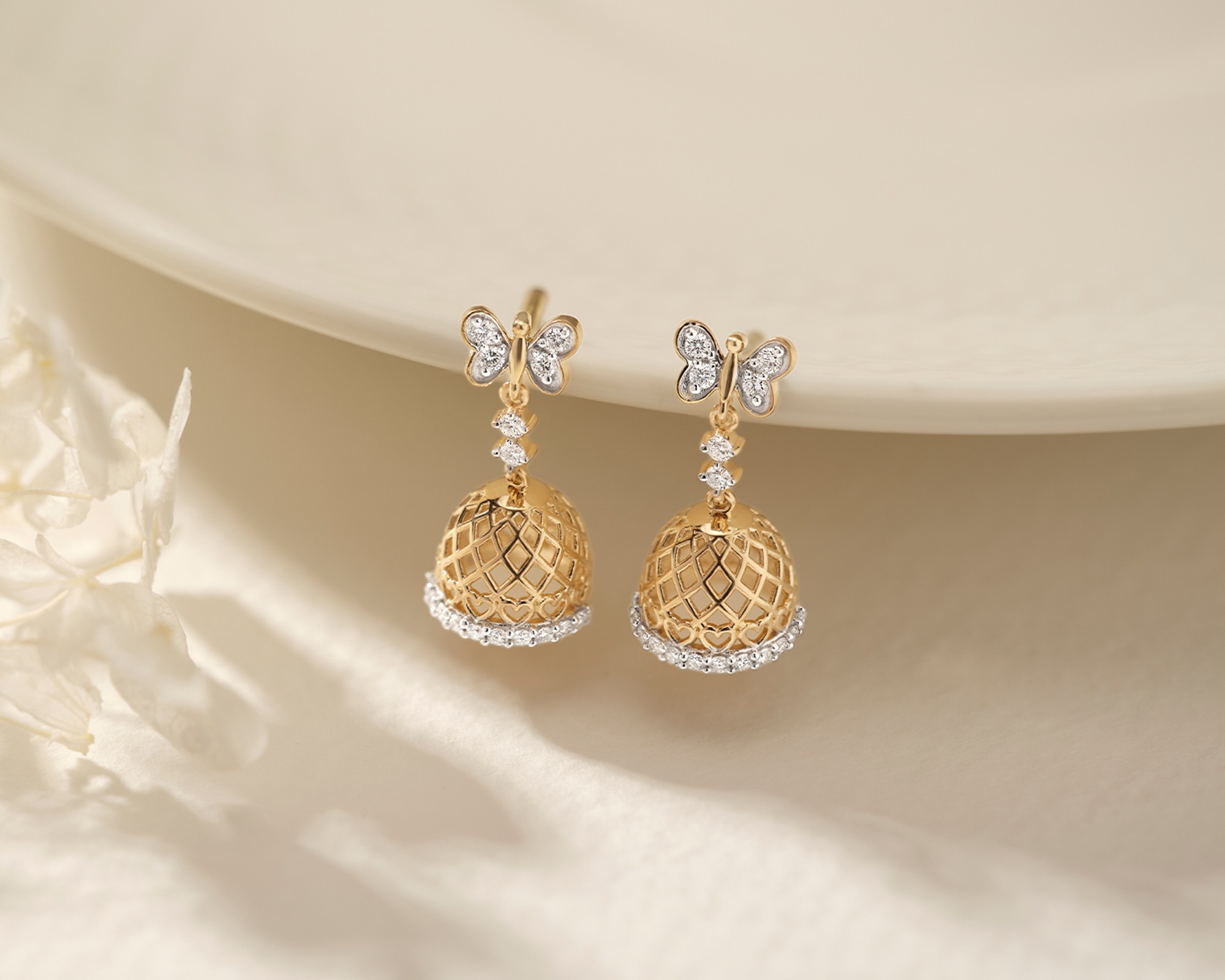
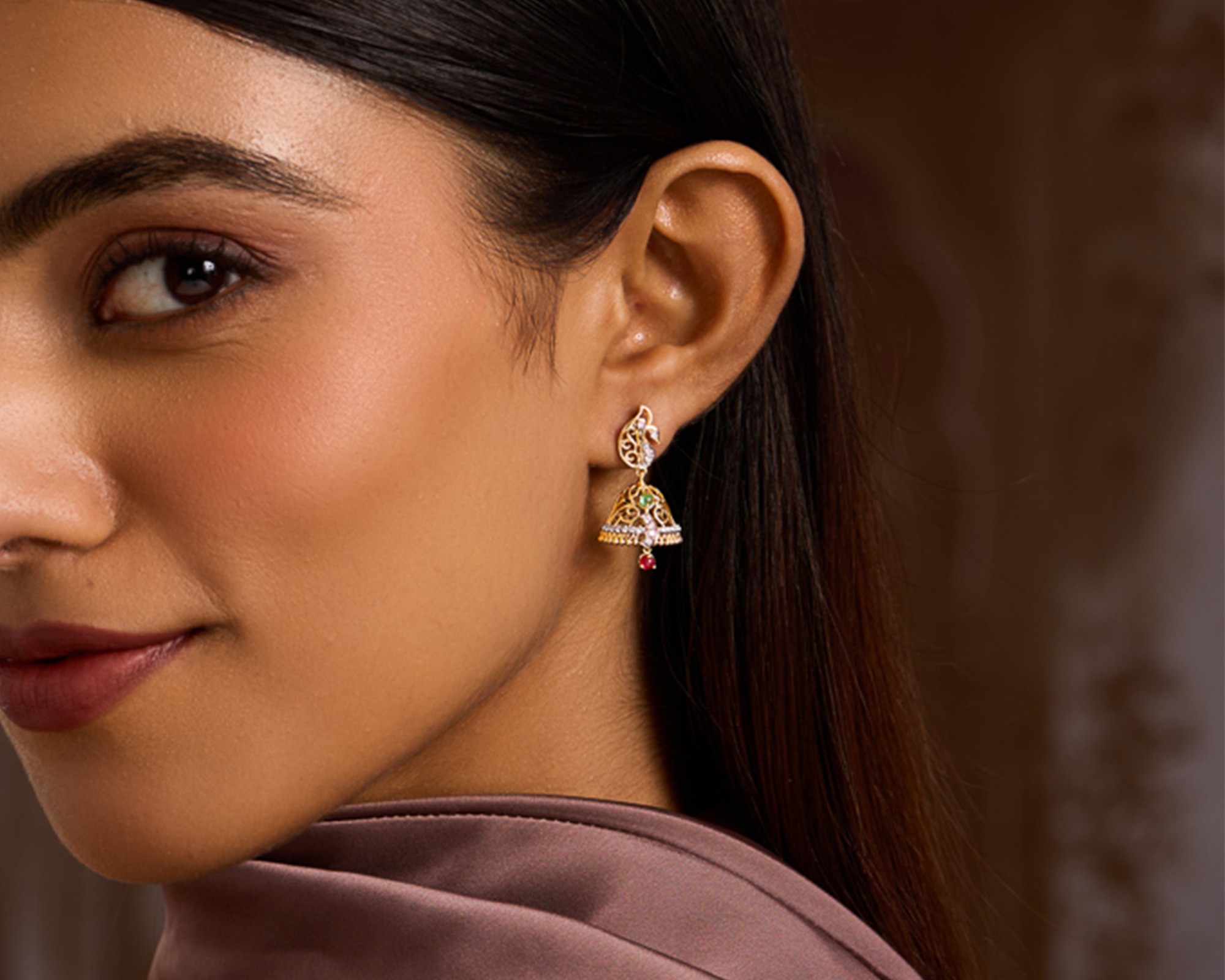
- Peacock jhumka earrings are the most traditional expression — the full-form bird or spread tail rendered in gold, often with enamel colour work, hanging from a domed bell. Substantial, ceremonial, and bridal in character, this is the format in which the motif was first built.
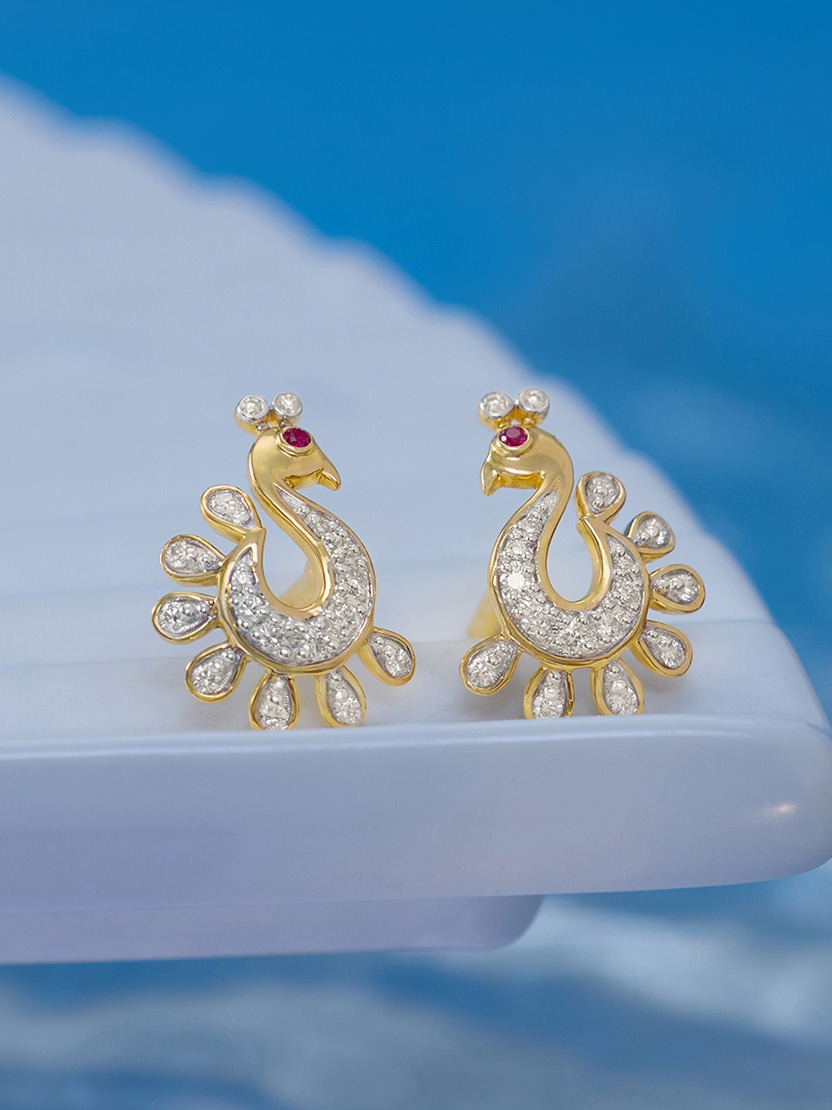
- Peacock stud earrings are the contemporary translation — the motif distilled to its essential elements (the eye, the feather arc, the tail) in a compact form suited to daily wear. A diamond-set peacock stud in 18KT gold is a genuinely different object from a bridal jhumka, yet unmistakably the same bird.
- Peacock drop earrings occupy the middle ground — longer than a stud, lighter than a jhumka, suited to the wide range of occasions between a weekday and a wedding reception. These are the most versatile formats in the range.
- Peacock hoop earrings take the motif into a fully contemporary silhouette — the bird’s feathers curving around the hoop’s circumference, catching light as the earring moves.
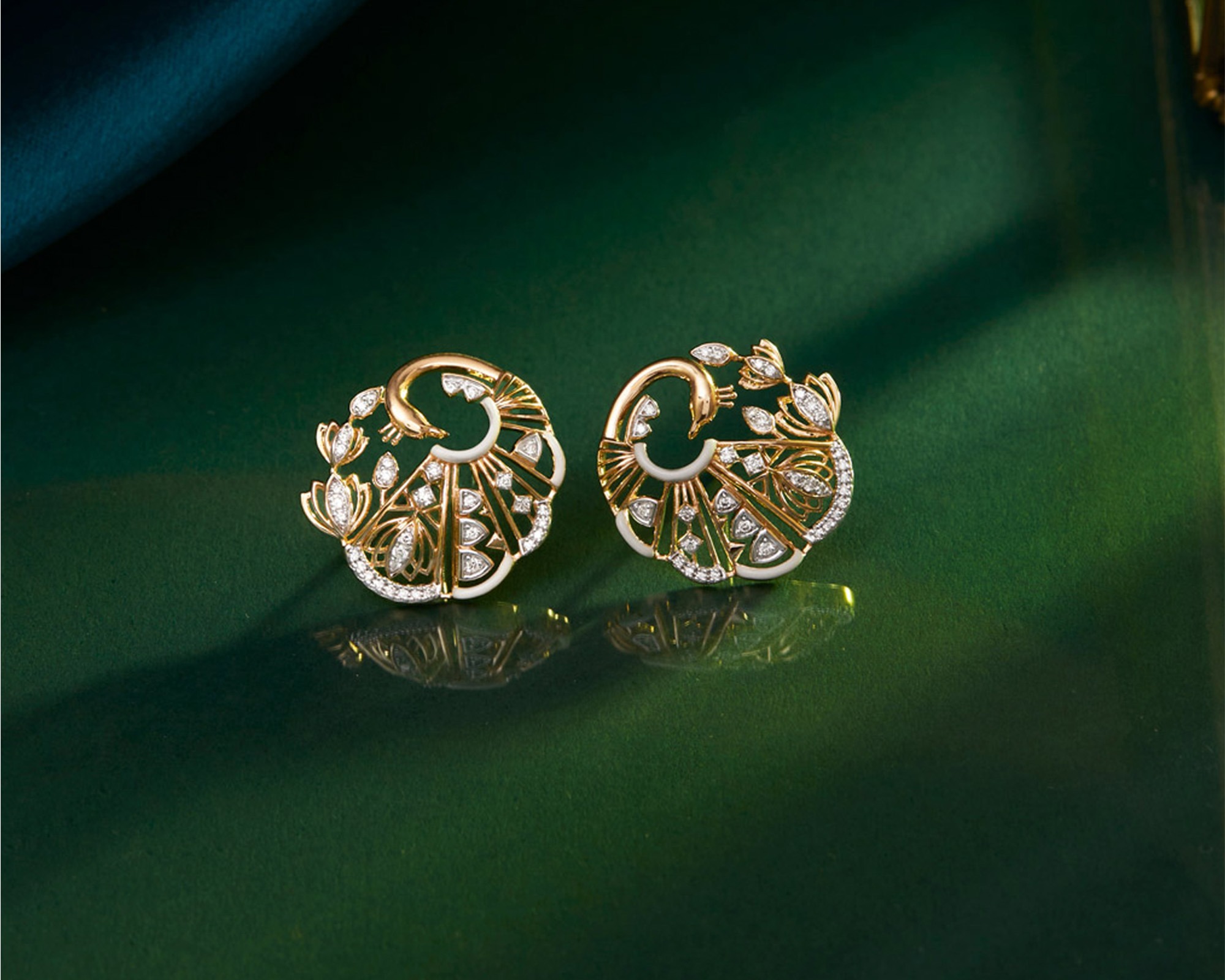
- Statement and sculptural peacock earrings — chandelier designs or elaborate multi-element drops — are the format for occasions that call for maximum presence. These are the pieces that anchor the entire look, typically worn with minimal other jewellery so nothing competes with their scale.
CaratLane’s peacock earring range spans all of these formats, featuring diamonds, gemstones, and hand-applied enamel work.
Gold, Diamond, or Gemstone — How Material Keeps the Design Fresh
The peacock motif’s adaptability across materials is arguably its most significant quality — the same design reads entirely differently depending on what it is made from.
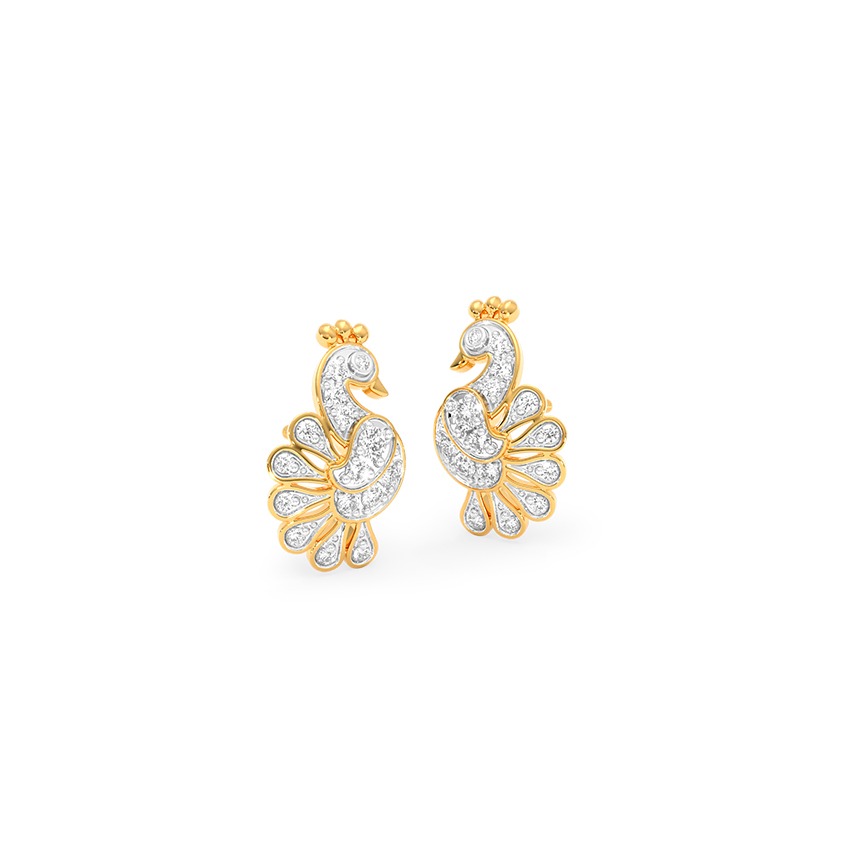
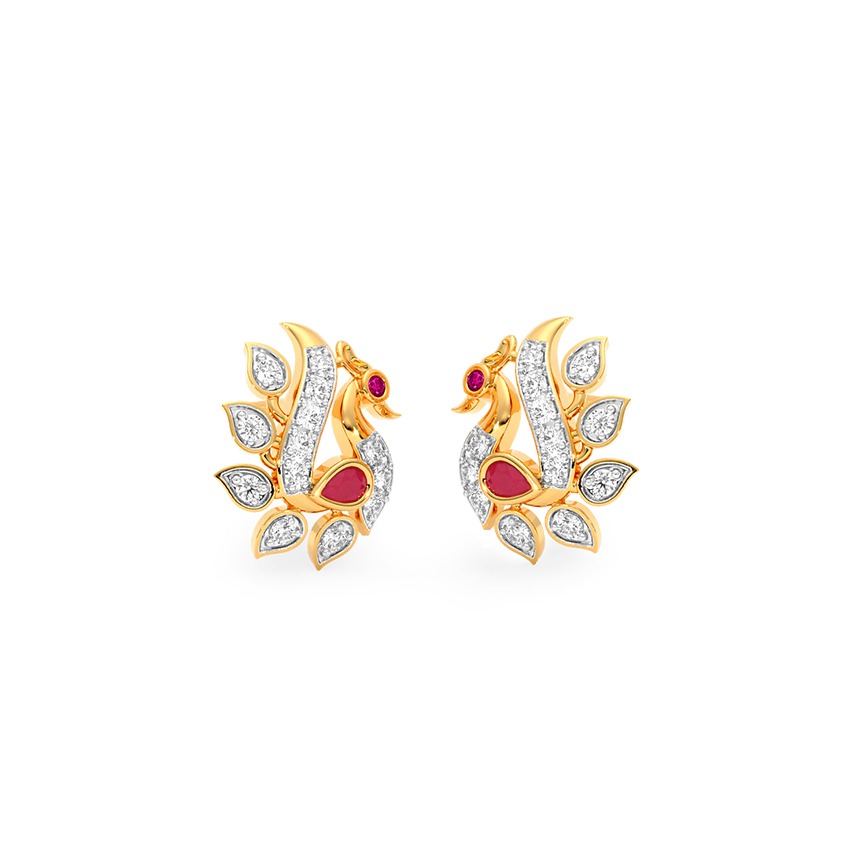
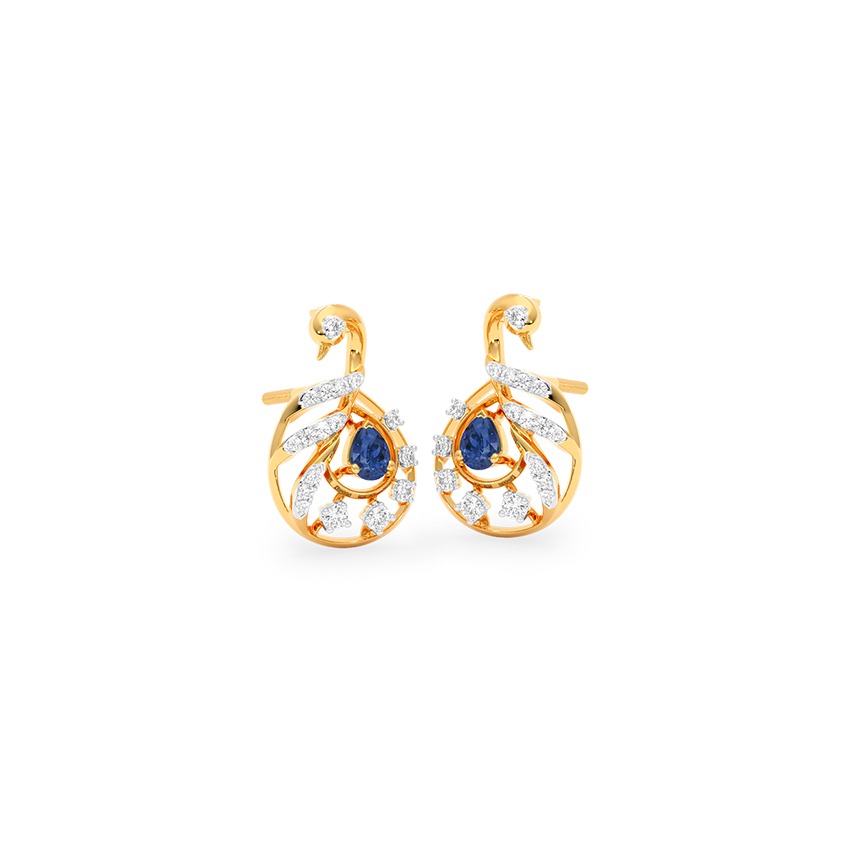
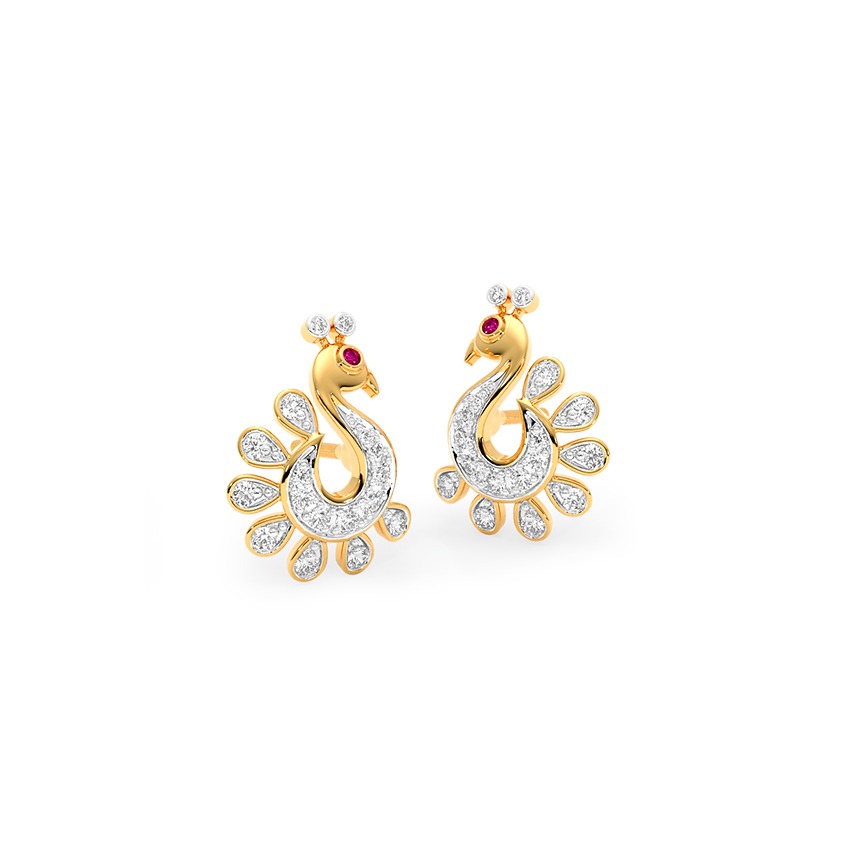
Antique Gold vs Modern Diamond Peacock Designs
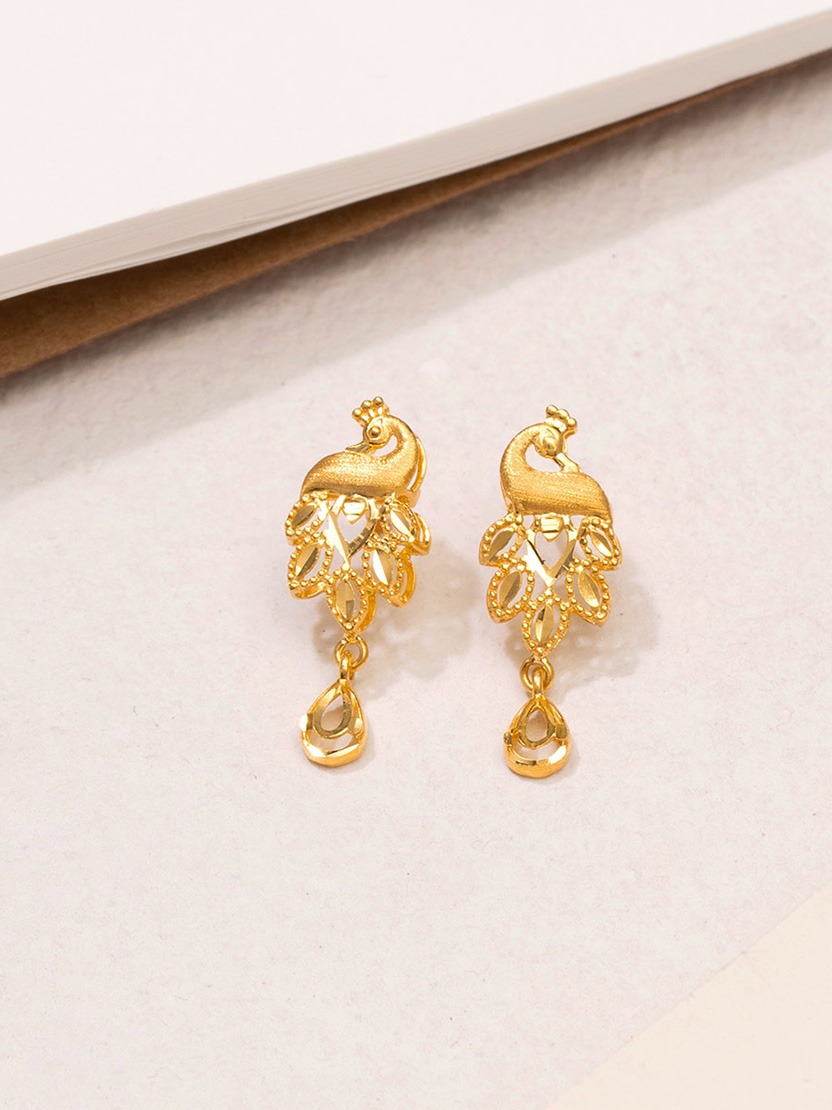
Peacock earrings in gold — particularly 22KT yellow gold — read as heritage and bridal. The weight of the metal, the warmth of the tone, and the richness of the surface position these as ceremonial pieces: gifts for significant occasions, pieces chosen for weddings and temple visits. Antique peacock earrings in gold with a matte or oxidised finish deepen this quality further, evoking the temple jewellery tradition.
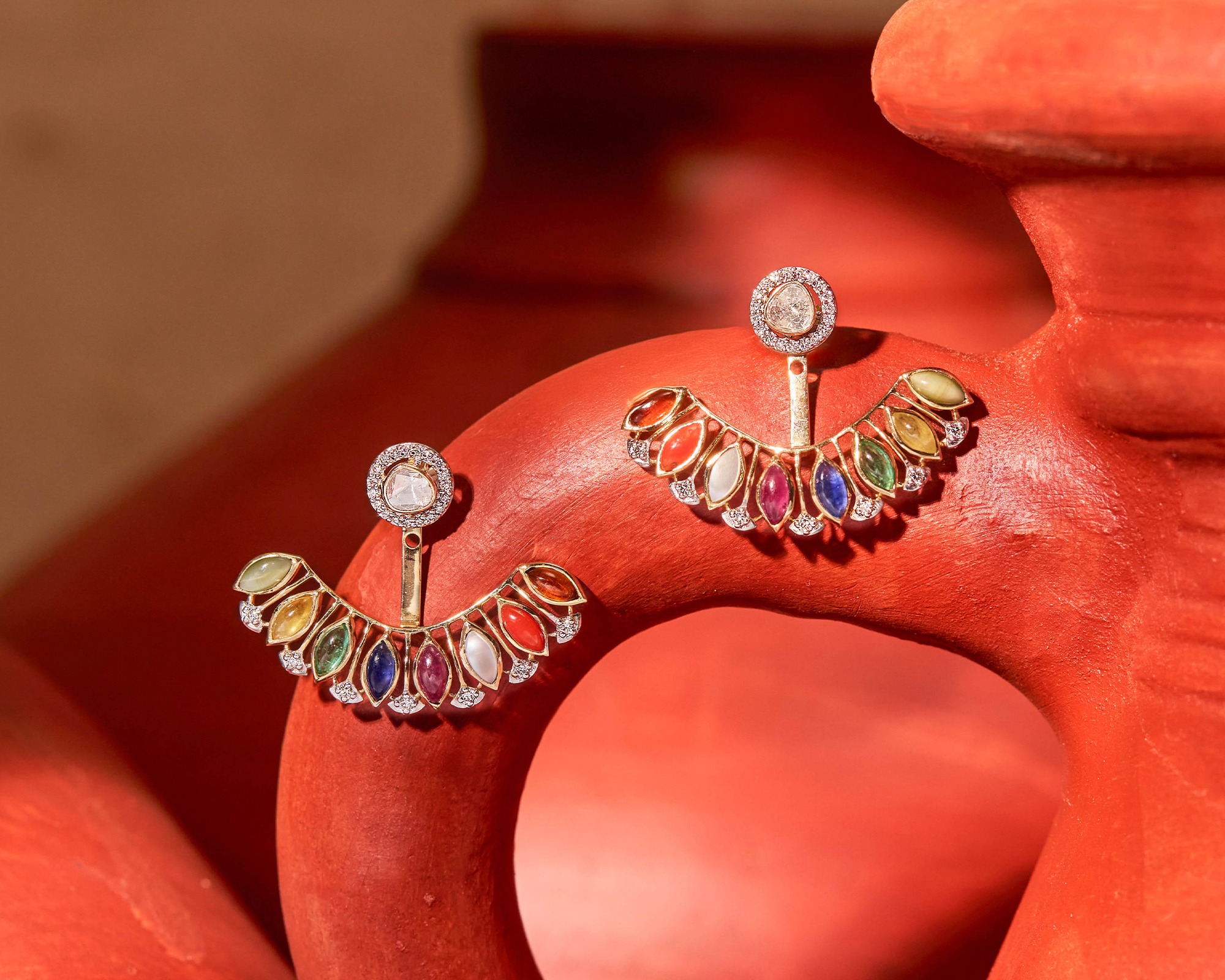
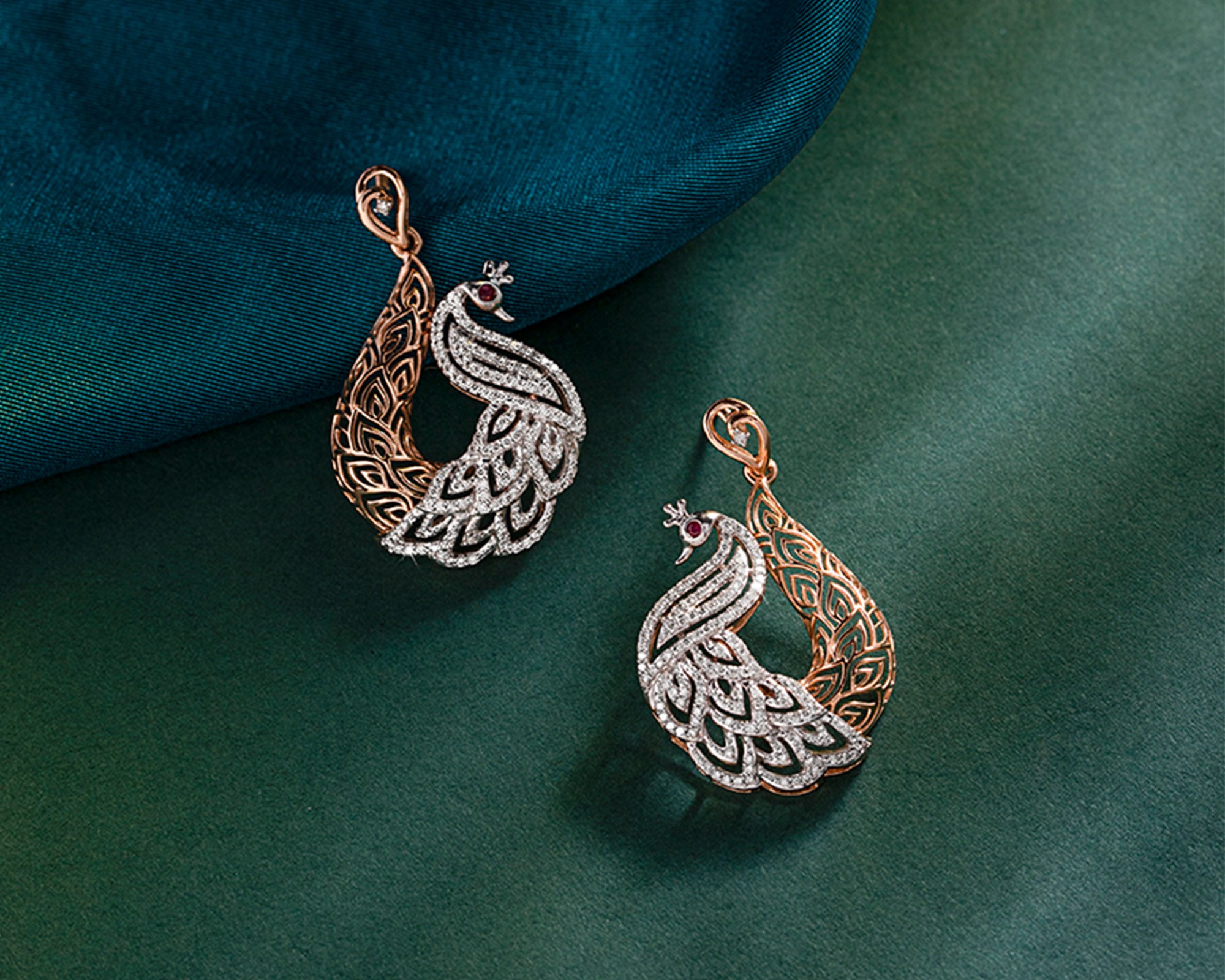
Peacock diamond earrings read entirely differently. The diamond accents along the tail feathers, or clustered at the eye of the bird — the same motif becomes contemporary fine jewellery. Peacock stone earrings incorporating coloured gemstones alongside diamonds restore the colour dimension of the motif in a more refined register than enamel, suiting buyers who want the peacock’s visual richness without the traditional weight.
The material is the message. Heritage or contemporary, ceremonial or everyday — the choice of metal and stone determines which version of the peacock you are wearing, even when the motif itself is identical.
Why Peacock Design Keeps Showing Up in “Latest” and “New Model” Collections
Seasonal renewal is what keeps peacock earrings’ gold designs appearing in “new model” and “latest design” searches year after year.
Designers reinterpret rather than retire. The scale shifts — this season’s peacock stud is smaller than last year’s. The colour palette changes: enamel blues give way to greens, or gemstone accents replace enamel entirely. The silhouette evolves: a jhumka base gets a contemporary update with an asymmetric drop. Each iteration generates new search behaviour from buyers who have seen the motif before but haven’t found the version that feels current enough to buy.
The latest gold peacock design earrings follow the same logic: new models appear as the design vocabulary expands rather than being recycled. The price of peacock gold earrings reflects the combination of gold weight, hand-applied enamel or stone work, and the complexity of the casting — it rises with elaborateness rather than following a fixed formula. A simple peacock stud and an elaborate sculpted drop can both be described as “latest model” in the same year, which is a further testament to how wide the design range has become.
How to Tell If a Peacock Earring Will Still Feel Current in 5 Years
Before buying any motif-driven piece, it is worth asking whether the appeal is in the trend or the design. For peacock earrings, the framework is simple.
- Proportion matters most: An earring sized appropriately for the way you actually dress — not scaled up for a trend moment — will outlast the trend. A jhumka that fits your face and your typical occasion profile will still feel right when the trend cycle moves on.
- Finish determines longevity: High-polish gold dates more quickly than matte, textured, or enamel-detailed finishes. A hand-enamelled peacock stud has a handmade quality that ages into craft; a highly polished, symmetrical version reads more as a product of its moment.
- Versatility across occasions is the test: A beautiful peacock earring that works for a festive occasion, a family gathering, and an Indo-western evening outfit is one that will be reached for repeatedly. One that only works for a wedding may not earn the same use. Ask whether the piece can move across contexts before committing to it.
- Style over motif-saturation: A peacock-style earring in a minimal stud format will outlast a heavily detailed version in trend relevance — not because small is better, but because restraint in design is harder to date than elaborateness.
Find Your Peacock Earring at CaratLane
The range at CaratLane covers the full spectrum of what the motif can be — jhumkas for ceremonial occasions, studs for daily wear, drops for the space in between, and sculptural hoops for the buyer who wants the peacock in its most contemporary form.
Explore CaratLane’s peacock earrings collection in gold, diamond, and gemstone designs across every silhouette, for every occasion.
FAQs
- Are peacock earrings still in style?
Yes — and consistently so across multiple trend cycles. The motif’s adaptability across gold, diamond, gemstone, and enamel formats, and across jhumka, stud, and drop silhouettes, means it keeps finding new expressions rather than exhausting a single one.
- What is the difference between a peacock jhumka and peacock stud earrings?
A peacock jhumka earring is a traditional bell-shaped drop earring featuring the full motif — typically more elaborate and suited to bridal and festive occasions. A peacock stud distils the motif to its essential elements in a compact form suited to daily and office wear. Same bird, entirely different design register.
- Why is the peacock such a popular motif in Indian earring design?
The peacock’s visual richness — iridescent colour, distinctive form, symbolic associations with grace and beauty — made it a natural subject for Indian peacock earrings across regional traditions. Its adaptability across materials and techniques, from temple gold to contemporary diamond settings, has kept it continuously relevant rather than periodic.
- Are peacock earrings available in gold and diamond?
Yes. Peacock earrings in gold are available in 22KT for traditional and bridal designs, and in 18KT for contemporary diamond and gemstone-set pieces. Peacock diamond earrings at CaratLane combine natural diamonds with gold and enamel work in designs that suit everyday wear through to festive occasions.
- What occasions are peacock earrings best suited for?
All of them, depending on the design. A peacock jhumka suits weddings, receptions, and festive celebrations. A diamond-set peacock stud suits daily and office wear. A peacock drop or hoop suits the occasions in between — family gatherings, social events, and Indo-western styling.
Suggested Reading
Peacock Design Jewellery – Meaning, Motifs & Trend Evolution in India