
Buying a diamond ring should feel like an exciting decision. For most people, it ends up feeling like a test they were not prepared for — too many options, unfamiliar terminology, and an underlying anxiety about whether what you are getting is genuine and worth the price.
This guide is designed to help you navigate the diamond ring-buying process with clarity and confidence. We’ll start by explaining what makes a diamond real, then move through verification methods, quality factors, and smart buying choices for any budget—all without unnecessary jargon or sales pressure.
What is a Real Diamond Ring?
A real diamond ring features a natural diamond. This stone forms over billions of years, under extreme heat and pressure deep within the earth. Its key quality is its origin: not manufactured, not lab-grown, and not a simulant like cubic zirconia or moissanite.
This distinction matters. The market includes alternatives that look similar but are different. Lab-grown diamonds are chemically similar to natural ones but produced in weeks, not millennia. Simulants like cubic zirconia look similar but are different materials with distinct properties.
The real vs fake diamond distinction is not always clear. It depends on your definition of “real.” Here, we focus on natural diamonds, which are the standard for engagement and investment jewellery.
How to Identify a Real Diamond Ring
Knowing how to verify a diamond is useful wherever you shop. Some methods can be done at home; others require a professional.
Simple At-Home Checks
These tests are not definitive, but they are a reasonable starting point.
- For the fog test, breathe on the stone as if it were a mirror. A real diamond disperses heat fast, so the fog vanishes in a second or two. A fake stays foggy for several seconds.
- For the water test, drop the loose stone in a glass of water. A real diamond sinks immediately because it’s dense. Fakes are lighter and may sink slowly or even float.
Both tests have limits. Some simulants can pass one or both. Use these tests as indicators, not proof.
The Professional Way to Verify
The most reliable verification is a certification document from a recognised gemological laboratory. GIA (Gemological Institute of America) certification is the global standard; it documents a stone’s carat weight, cut, colour, clarity, and origin. A certified stone comes with a report number that can be verified online.
Beyond certification, store credibility matters. A jeweller with transparent pricing, hallmarked gold, and a clear return policy is operating at a level of accountability that significantly reduces purchase risk. Knowing how to check a real diamond ring starts with knowing where you are buying it from.
Common Signs of a Fake Diamond
A stone that looks too perfect, flawless to the naked eye, with no internal characteristics whatsoever, may be synthetic or a simulant, since most natural diamonds have minor inclusions visible under magnification. A price that seems dramatically lower than the market rate for the stated carat and quality is another flag.
Authenticity has a cost, and significant underpricing usually means something about the stone is not what it appears to be.
Understanding Diamond Quality Before You Buy
The price of a diamond is determined by four factors — the 4Cs — and understanding how they interact gives you considerably more control over your purchase decision.
Colour and Clarity Basics
Diamond colour is graded from D (colourless) to Z (yellow or brown). The difference between grades is subtle to the naked eye. Choosing G or H instead of D or E saves money with no visible loss in a ring.
Clarity refers to the presence of internal inclusions or surface blemishes. The scale runs from Flawless to Included. For most buyers, a VS2 or SI1 clarity grade — where inclusions are not visible to the naked eye — represents the best balance of quality and value. What most affects diamond ring quality in practice is whether the inclusions are visible when the ring is worn, not under a jeweller’s loupe.
Cut and Sparkle
Of the four Cs, cut has the most visible impact on how a diamond looks. A well-cut diamond reflects light efficiently, producing the brilliance and fire that make a stone appear alive. A poorly cut diamond of higher carat or clarity can look dull by comparison.
When comparing stones, prioritise cut quality. A smaller, excellently cut diamond will consistently outperform a larger stone with a poor cut in terms of visual impact.
Carat vs Price
Carat measures weight, not size. The relationship between carat and price is not linear. A 1-carat diamond usually costs much more than a 0.5-carat diamond because larger stones are rarer. Buying just below a round-number threshold, such as a 0.90 carat instead of a 1.00 carat, can lead to significant savings with almost no visible size difference.
How to Choose the Right Diamond Ring for Your Budget
Diamond jewellery prices depend on carat, cut, colour, and clarity, as well as the metal, design, and brand. Knowing this helps you make informed trade-offs instead of just buying at your budget’s limit.
Budget Under ₹50,000
In this range, expect stones of 0.10–0.25 carats. Focus on cut quality. A small, well-cut diamond in a simple setting will look better than a bigger, poorly cut one. These designs are suitable for daily wear and gifting. 14KT gold is standard.
Mid-Range Budget
This budget lets you access stones weighing 0.25–0.75 carats. You can achieve greater clarity and cut without sacrificing much in size. Real diamond engagement rings are widely available here. A well-chosen solitaire or halo can be impressive. Certified stones are also more common, which matters for long-term value.
Premium Budget
At the premium level, a 1-carat real diamond ring is achievable. You can find options if you’re willing to make trade-offs on colour or clarity. VS1–VS2 clarity stones with excellent cut grades are standard at this tier. Design choices now include three-stone rings, elaborate halos, and platinum mountings.
Real diamond ring price advice: carat gets attention, but cut gives visible value. Prioritise cut. Buy certified. Choose a jeweller with a clear exchange and return policy.
Popular Real Diamond Ring Styles to Consider
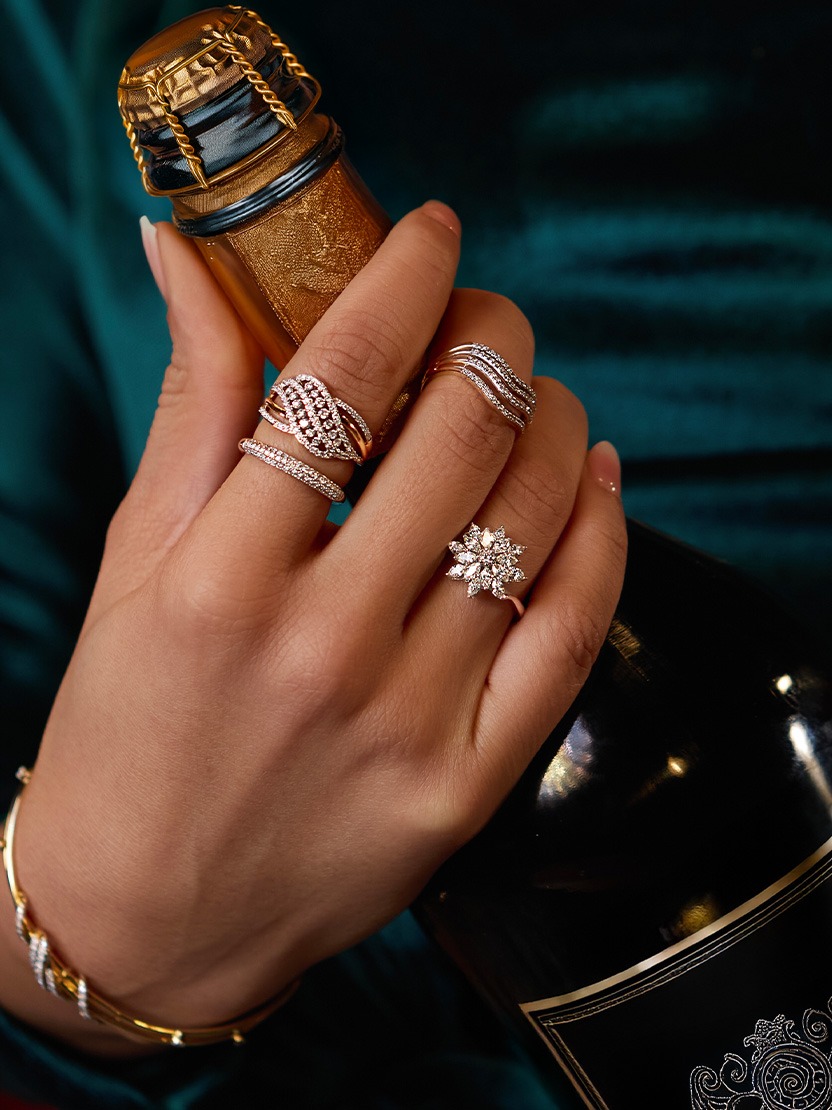
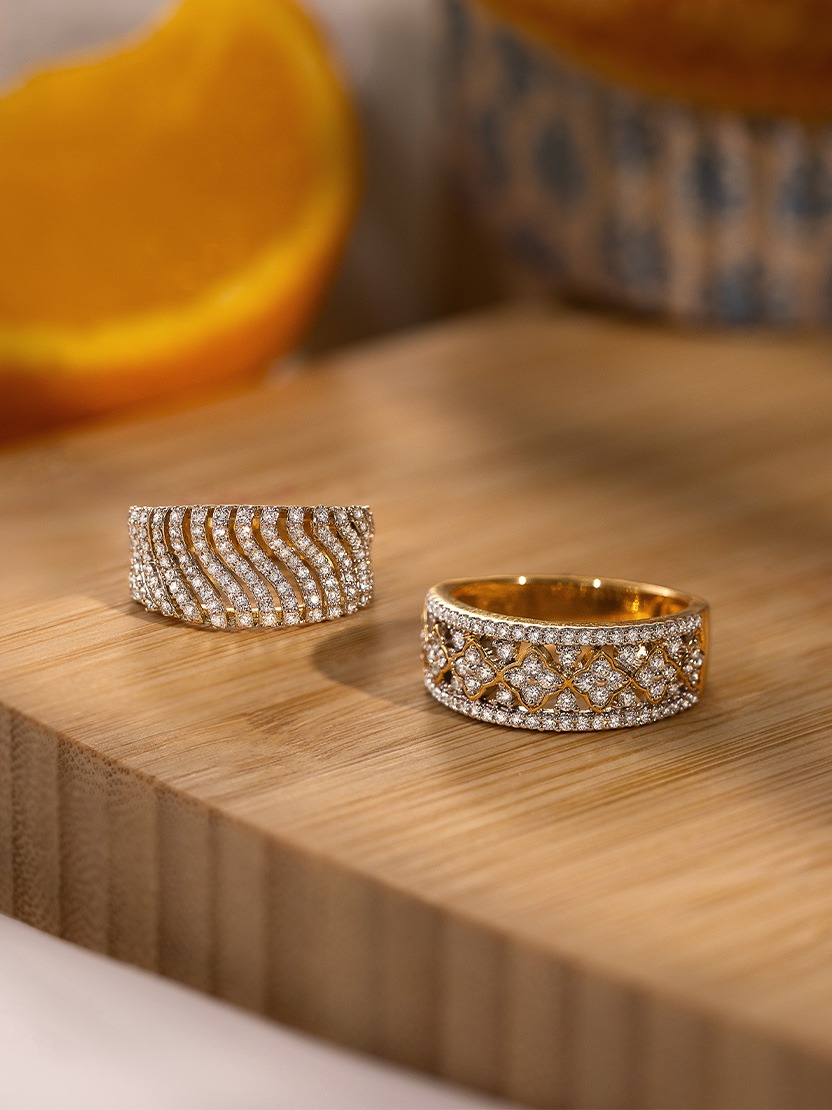
The style of a diamond ring shapes how it is worn, what it communicates, and how it ages. Here is a practical overview of the main categories.
Each ring style serves a different purpose. Knowing which fits the occasion and wearer narrows your choices before you even look at stones.
Solitaire Rings
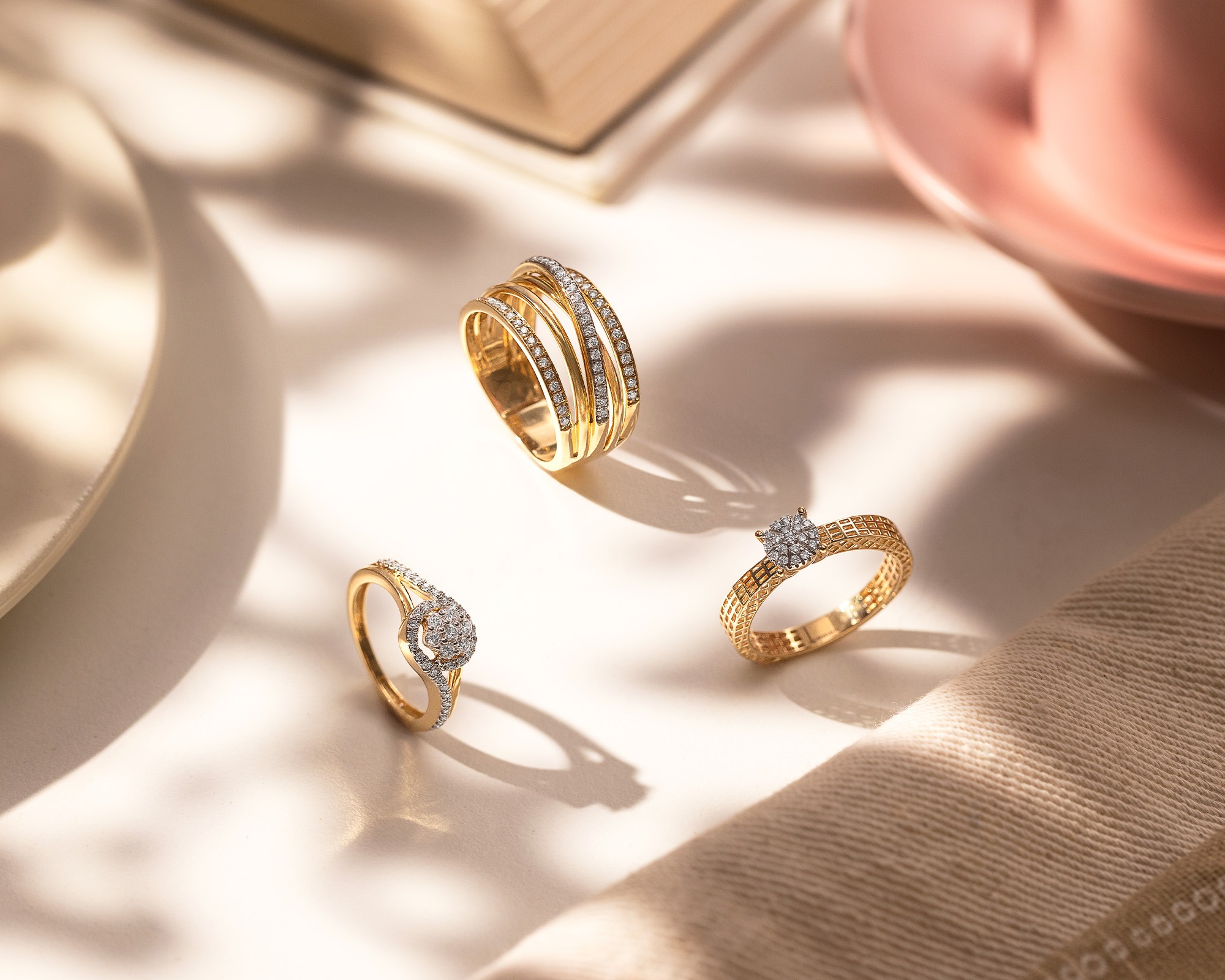
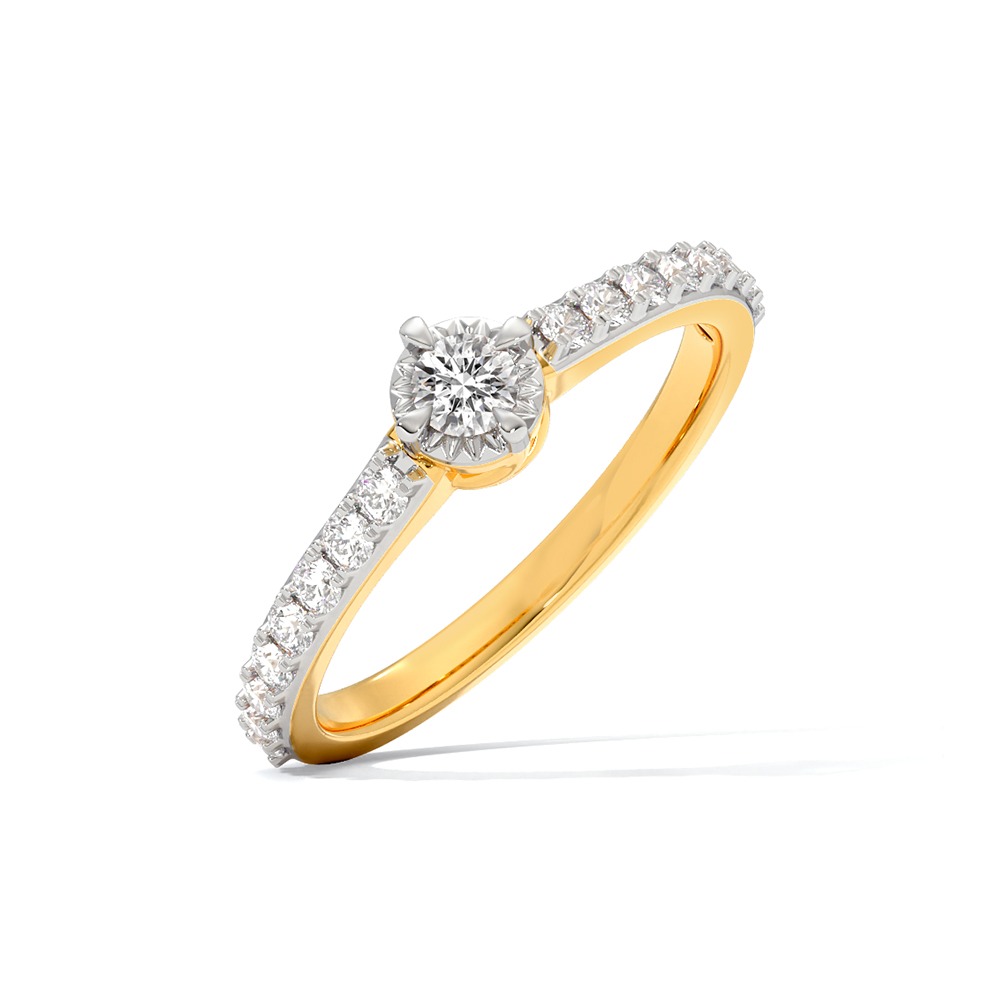
The real diamond solitaire ring is the most enduring format in fine jewellery — a single stone in a clean setting, with nothing to distract from the diamond itself. Its longevity as a style comes from its simplicity: it does not date, it does not require a matching aesthetic, and the stone’s quality is immediately visible. For a single stone diamond ring purchased as an engagement ring or a significant milestone gift, the solitaire remains the benchmark.
Engagement Diamond Rings
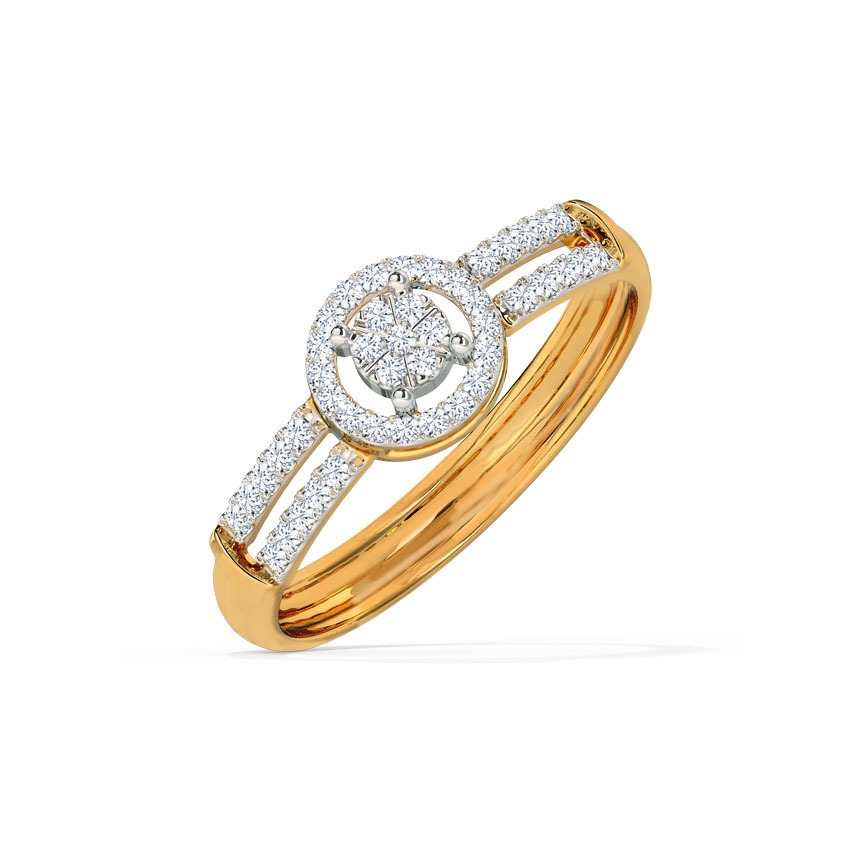
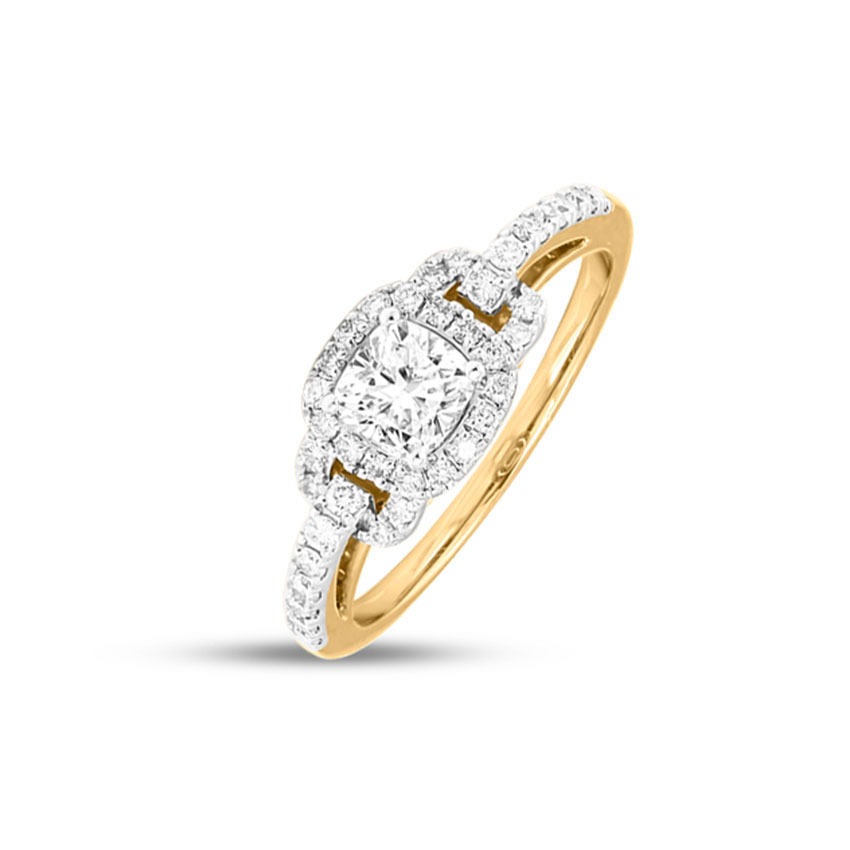
Real diamond engagement rings tend toward designs that maximise the stone’s visual presence — solitaires, halo settings where smaller diamonds surround the centre stone, and three-stone designs, which embody the traditional symbolism of past, present, and future. The priority for an engagement ring is a stone with excellent cut and a certified origin, since this is a piece worn daily and expected to last.
Rings for Women
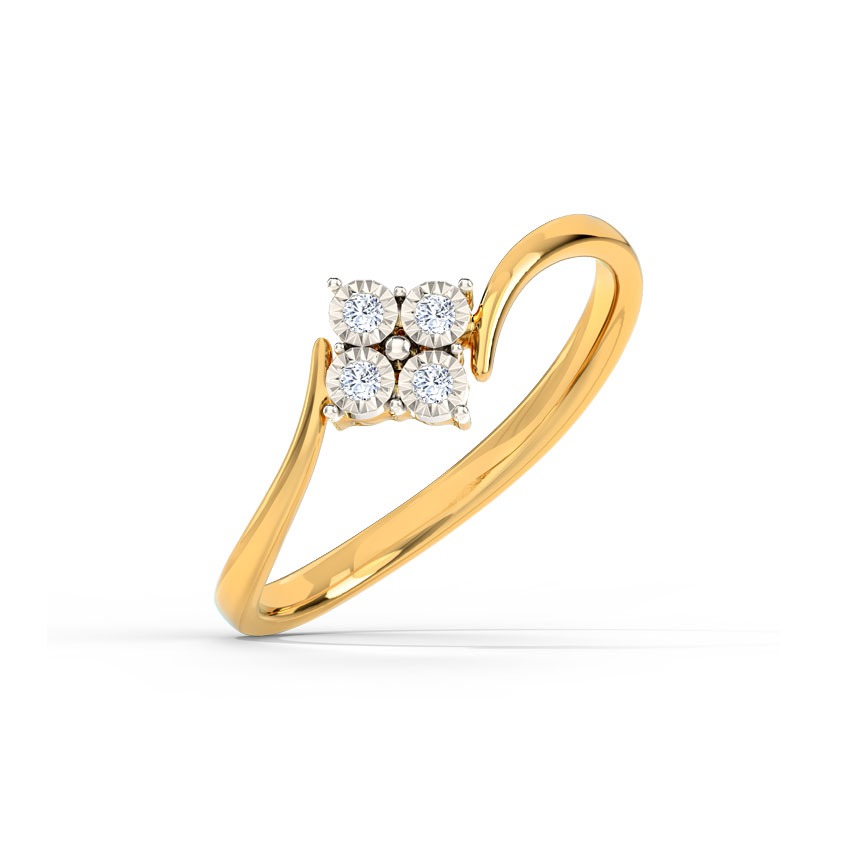
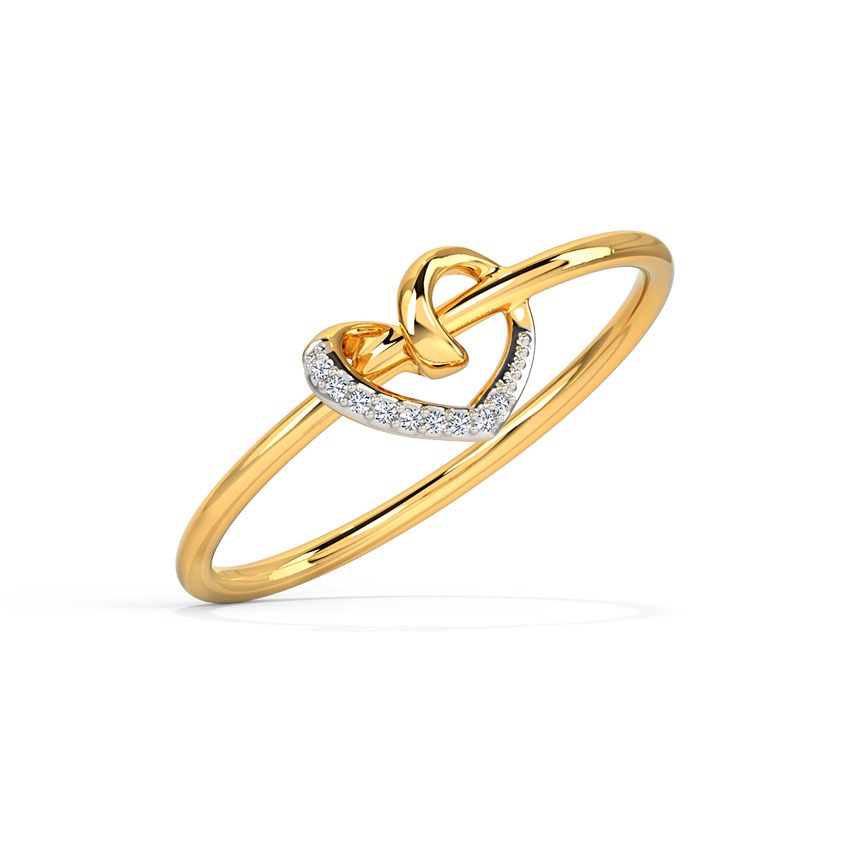
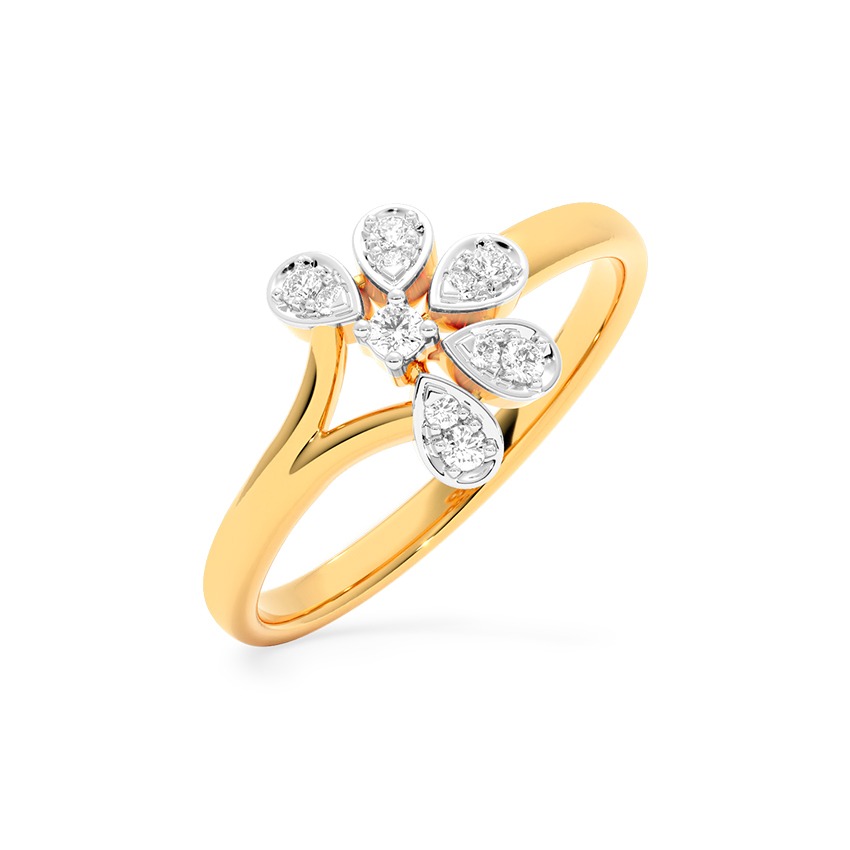
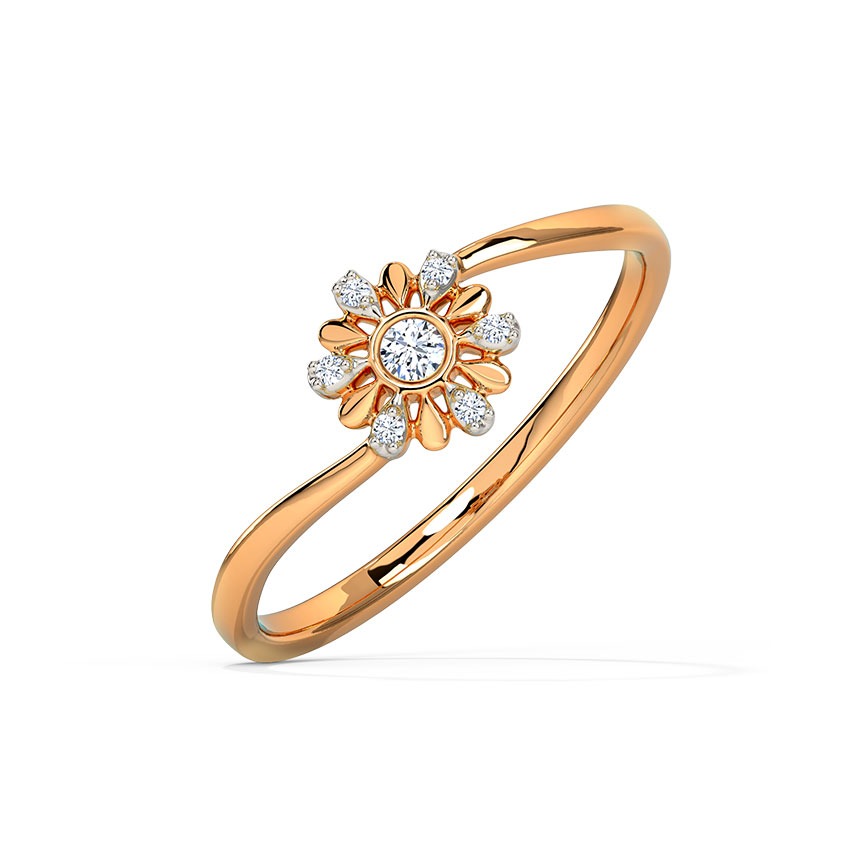
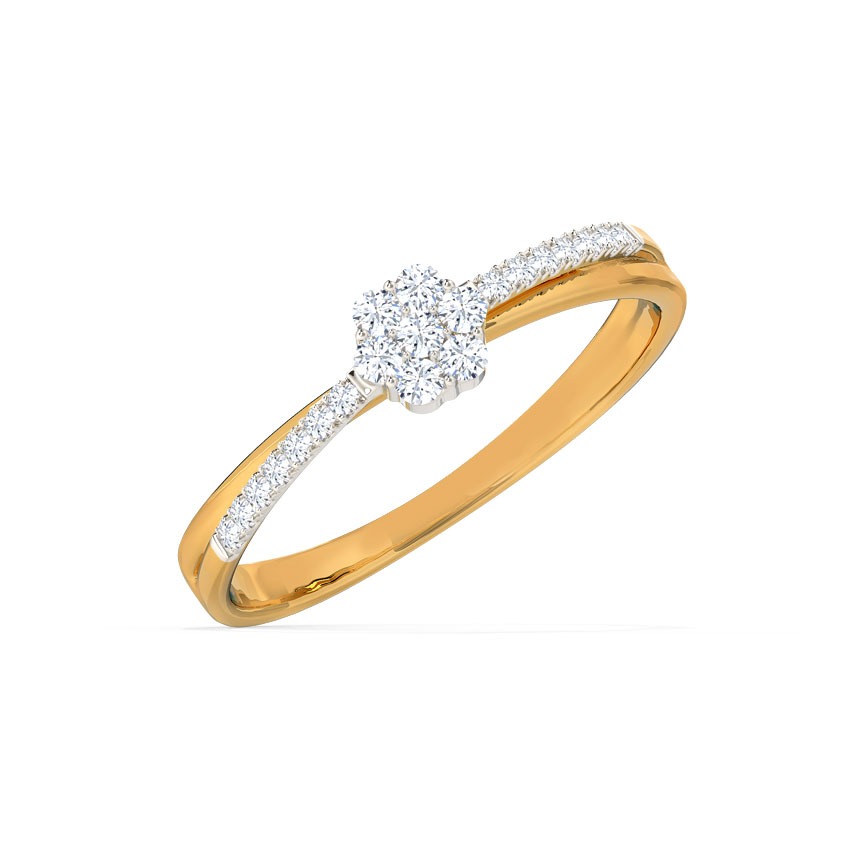
Real diamond rings for women span the full range. Minimal everyday designs use small stones. Elaborate pieces suit special occasions. For daily wear, settings that protect the stone from snagging—like bezel or flush settings—are practical and stylish. When gifting, choose a design that matches the recipient’s style, rather than one that only makes its own statement.
Rings for Men
Real diamond rings for men typically lean toward bolder, more architectural designs — wider bands, bezel settings, or designs that integrate the diamond into the ring’s structure rather than elevating it. Minimalism is the consistent thread: a single well-placed stone on a substantial band reads as confident rather than ornate.
Gold, Platinum & Rose Gold Rings
The choice of metal affects both the appearance and the durability of the ring. Real gold diamond rings in 18KT yellow gold are the most traditional pairing, particularly for Indian occasions. Platinum real diamond rings offer greater durability and a cooler tone that suits white diamonds particularly well. A rose gold real diamond ring has a warmer, more contemporary aesthetic that works well with both round and fancy-cut stones.
Each metal has different maintenance requirements and different long-term wear characteristics — worth considering alongside the visual preference.
Real Diamond Ring Price Guide in India
The quality of where you buy matters as much as the quality of what you buy. A genuine diamond in a poorly certified or non-transparent transaction leaves you with no recourse if something is not as represented.
What to Look for in a Brand
Transparency is the most important criterion: clear pricing, detailed product specifications, and published certification standards. A straightforward, well-documented return and exchange policy signals that the brand stands behind what it sells. Hallmarked gold settings – or equivalent-certified stones are the minimum standards for any significant purchase.
Why Choose CaratLane
CaratLane operates at this standard across its diamond jewellery range. Every piece features BIS hallmarked gold and certified diamonds, with transparent pricing and verifiable specifications. The Try-at-Home service lets you see and try pieces in your own environment before committing — particularly useful for a ring purchase, where fit and appearance in context matter. 15-day returns and lifetime exchange provide the purchase confidence that a significant jewellery decision warrants.
Explore real diamond rings online at CaratLane.
Common Mistakes to Avoid When Buying a Real Diamond Ring
- Prioritising carat over cut. A large stone with a poor cut will look dull. A smaller, excellently cut stone will consistently outperform it visually. Cut is the quality factor most directly visible in daily wear.
- Skipping certification. Without a third-party certificate, you have no independent verification of what you are buying. For any significant purchase, certification is the standard worth insisting on.
- Not verifying authenticity. At-home tests are useful indicators but not conclusive. Buying from a certified jeweller with a documented return policy is the most reliable way to protect your purchase.
- Overpaying for brand premiums without substance. Brand trust matters, but it should be backed by transparent certification, clear pricing, and verifiable quality standards — not just reputation.
Buy Smart, Not Just Expensive
A diamond ring is one of those purchases where more money does not automatically mean a better outcome. A considered, well-researched decision at ₹40,000 can produce a more satisfying result than an unconsidered one at ₹2,00,000.
The framework is simple: prioritise cut quality, buy certified, understand the trade-offs between the 4Cs within your budget, and buy from a jeweller whose policies give you confidence before and after the purchase. The right real diamond ring is the one that balances quality, meaning, and value — not just the one with the largest stone.
FAQs
- How to check if a diamond ring is real?
The fog and water tests provide a basic starting point for at-home testing. The definitive method is third-party certification — a certificate independently documents the stone’s properties and origin. Buying from a jeweller who provides certified stones removes most of the uncertainty.
- How much does a real diamond ring cost in India?
Real diamond ring prices in India start at around ₹8,000–₹10,000 for small stones in simple settings, with the mid-range running to ₹1,50,000 for engagement-quality pieces. A 1-carat real diamond ring typically starts above ₹1,50,000, depending on cut, clarity, and colour. Price varies significantly with the 4Cs and the metal choice.
- What is the best real diamond ring to buy?
It depends on the purpose and budget. For daily wear, a well-cut stone in a secure setting in 14KT or 18KT gold. For engagement, a certified solitaire with an excellent cut grade. For gifting, a design that reflects the recipient’s style rather than the largest stone the budget allows. The best real diamond ring is always the one chosen with a clear understanding of what matters most.
- What is the difference between real and fake diamond rings?
A real vs fake diamond ring comes down to material, origin, and physical properties. Natural diamonds form in the earth over billions of years; simulants like cubic zirconia are manufactured materials with different optical and physical properties. The difference is visible under professional assessment and documented through certification.
- Which diamond ring is best for an engagement?
A solitaire engagement diamond ring with an excellent or very good cut grade is the most consistently recommended choice — the design is timeless, the stone is the focal point, and the cut quality is visible in daily wear. Certification from an equivalent body is particularly important for an engagement ring, both for authenticity and for long-term value.
Suggested Reading:
Breaking the Bias: How Real Diamond Jewellery Choices for Women Have Changed Over the Decades