Isha Ambani didn’t just wear jewellery to the Met Gala. She wore her mother’s.
That single fact, that the extraordinary pieces adorning Isha Ambani at the Met Gala 2026 came from Nita Ambani’s personal collection, accumulated over a lifetime, changes everything about how the look should be read. This was not a stylist pulling archive pieces for maximum impact. This was an inheritance, worn on a global stage before every camera in Fashion.
Over 1,800 carats of diamonds, emeralds, and polki, more than 1,000 gemstones across a single blouse, made Isha Ambani arguably the most bejewelled guest in Met Gala history. The theme was “Fashion is Art.” She embodied it not through costume but through adornment: the oldest, most distinctly Indian argument that beauty and meaning are inseparable.
Here is what she actually wore — and what each piece means.
The Look That Made History: What Isha Ambani Wore to the Met Gala 2026
The custom Gaurav Gupta saree was crafted using pure gold threads, with intricate hand-painted motifs inspired by traditional Pichwai art, layered with detailed embroidery, a collaboration with Swadesh that treated fabric as fine art. The sculptural cape, a signature Gupta element, brought architectural modernity to a look rooted in centuries of Indian craft.
Over 50 artisans worked for more than 1,200 hours to bring the vision to life. In an era of fast fashion and algorithmic dressing, that number deserves a moment of stillness.
The jewellery was not chosen to match the outfit. The jewellery was the point. Stylist Anaita Shroff Adajania described the aim as merging legacy pieces with modern settings in a way that felt continuous — not historical, not nostalgic, but alive.
And the theme, “Fashion is Art”, found its truest expression not on a runway but on Isha Ambani’s blouse, where Mughal jewellery techniques met a Nizam’s sarpech met 50 carats of Colombian emerald met a 16th-century setting technique that hasn’t changed because it doesn’t need to.
The Number That Stopped the World: 1,800 Carats
The blouse alone featured over 1,000 diamonds and precious stones, together weighing more than 1,800 carats.
For context, a standard solitaire engagement ring typically weighs 0.5 to 1 carat. The stone that most people consider a significant diamond purchase sits somewhere between half a gram and one gram of compressed carbon.
Isha Ambani wore 1,800 of those carats on one blouse.
1,800 carats sounds like a number. Until you understand that each stone carries a story, a provenance, a cutting tradition, a generation of hands that set it, then it sounds like a library.
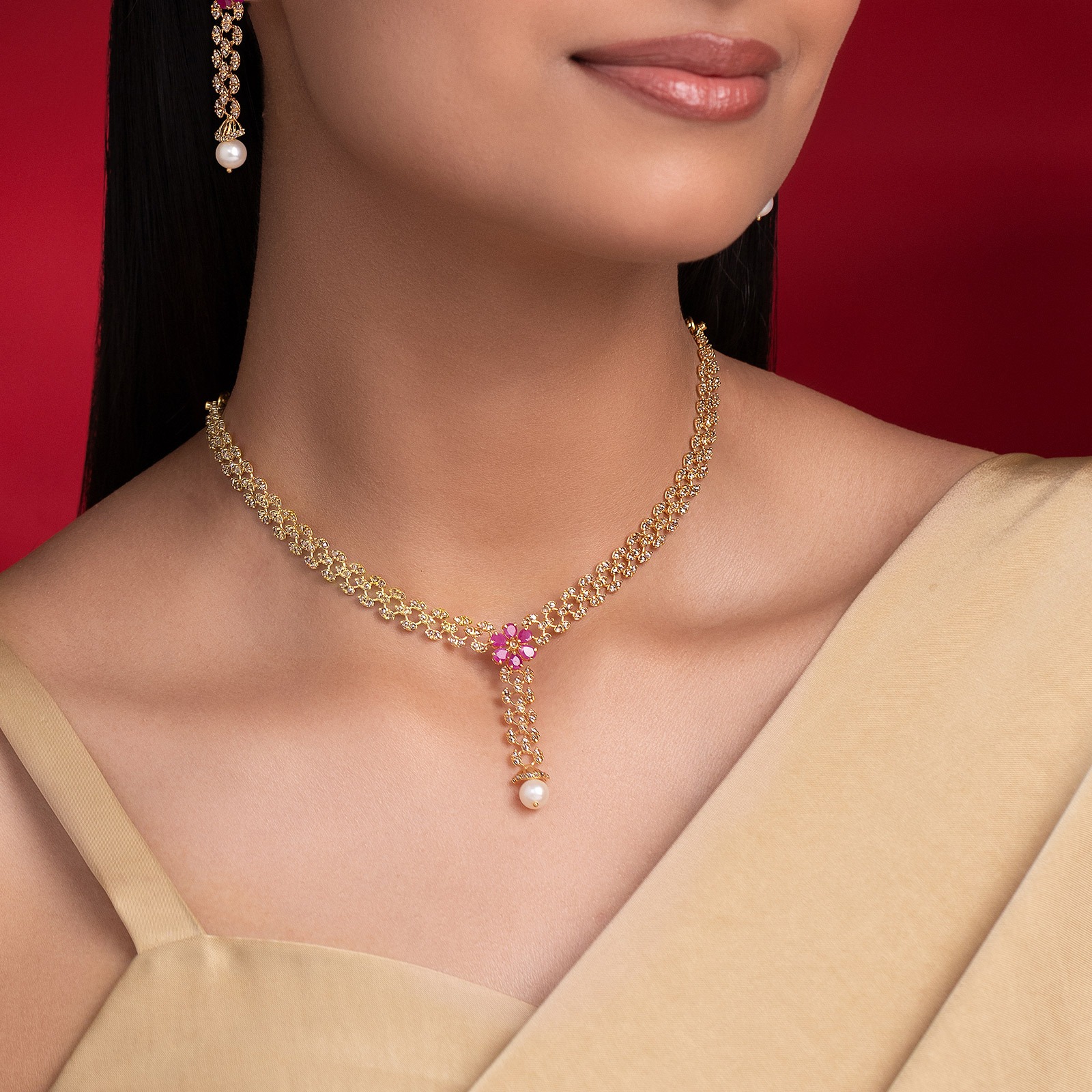
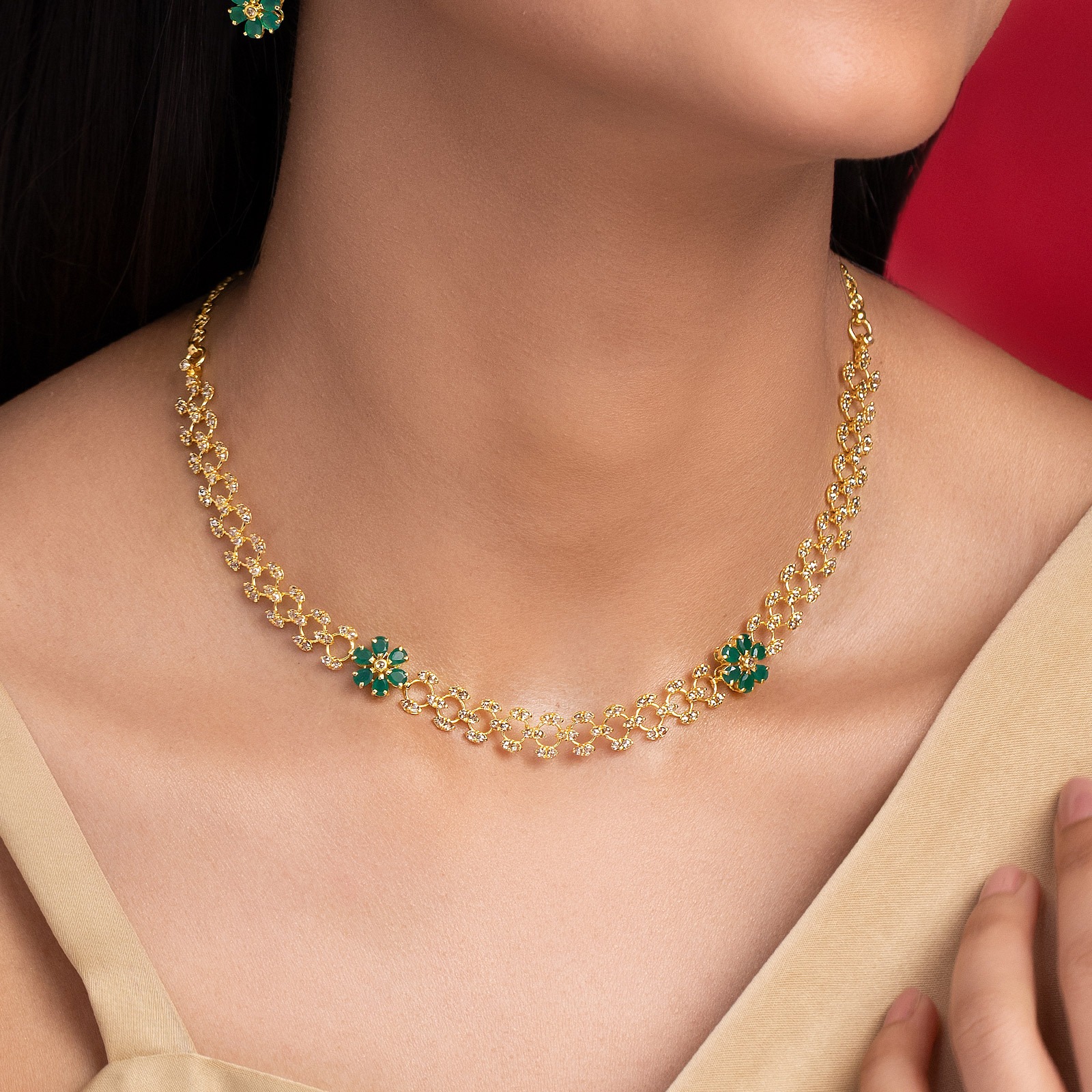
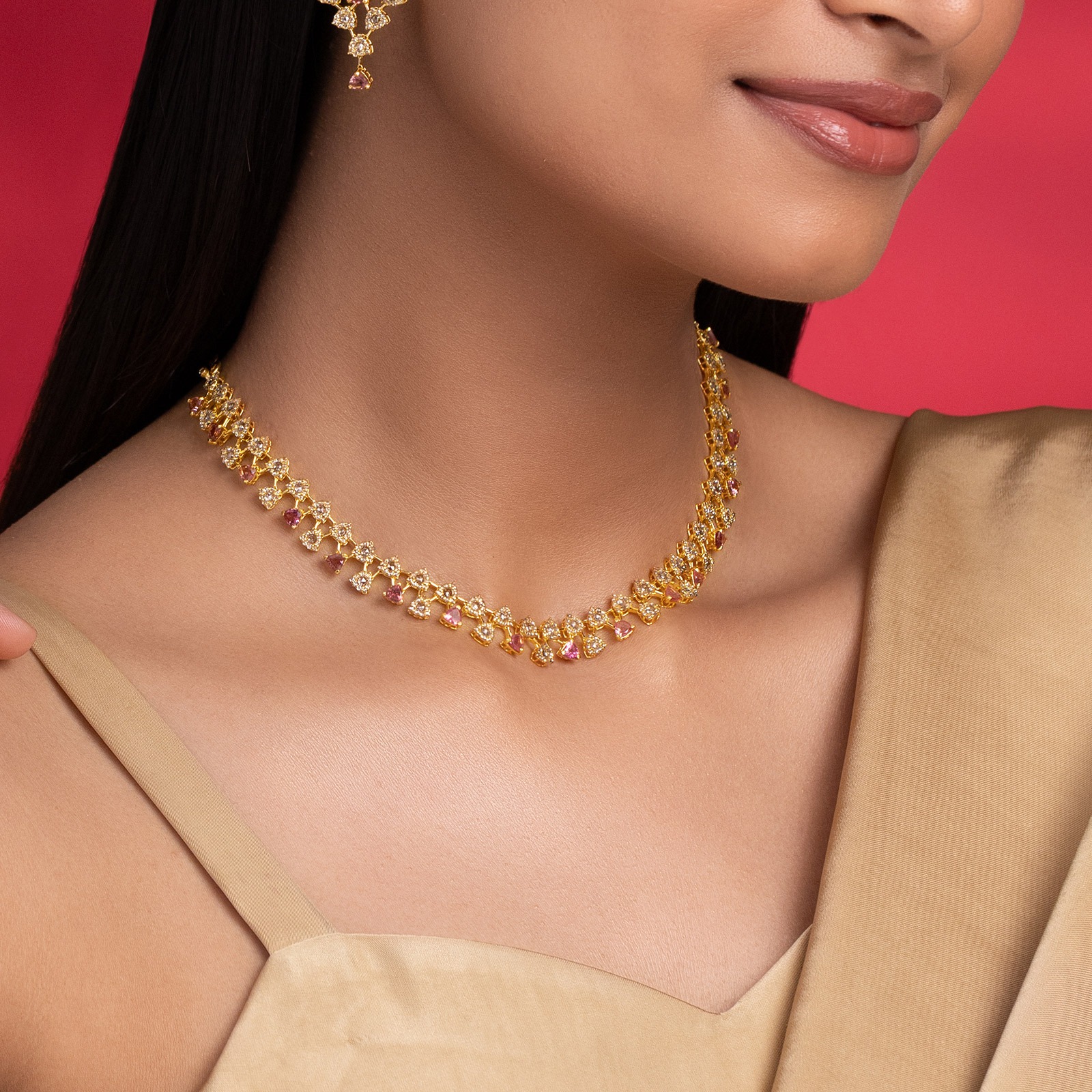
Every Jewellery Piece in Isha Ambani’s Met Gala Look, Explained
This is where the look becomes a masterclass. Each piece deserves its own reading, not as a jewellery catalogue entry, but as an object with history, technique, and intention.
The Jewellery-Embedded Blouse: Polki and Kundan Woven Into the Garment
The blouse was not styled. The blouse was the jewellery.
As Anaita Shroff Adajania described it, the piece brings together heirloom old mine diamonds collected over time as part of Nita Ambani’s private collection with rare emeralds and polki, raw, uncut diamonds set in gold, along with contemporary fine cut pieces, resulting in something deeply rooted in heritage yet striking in its presence.
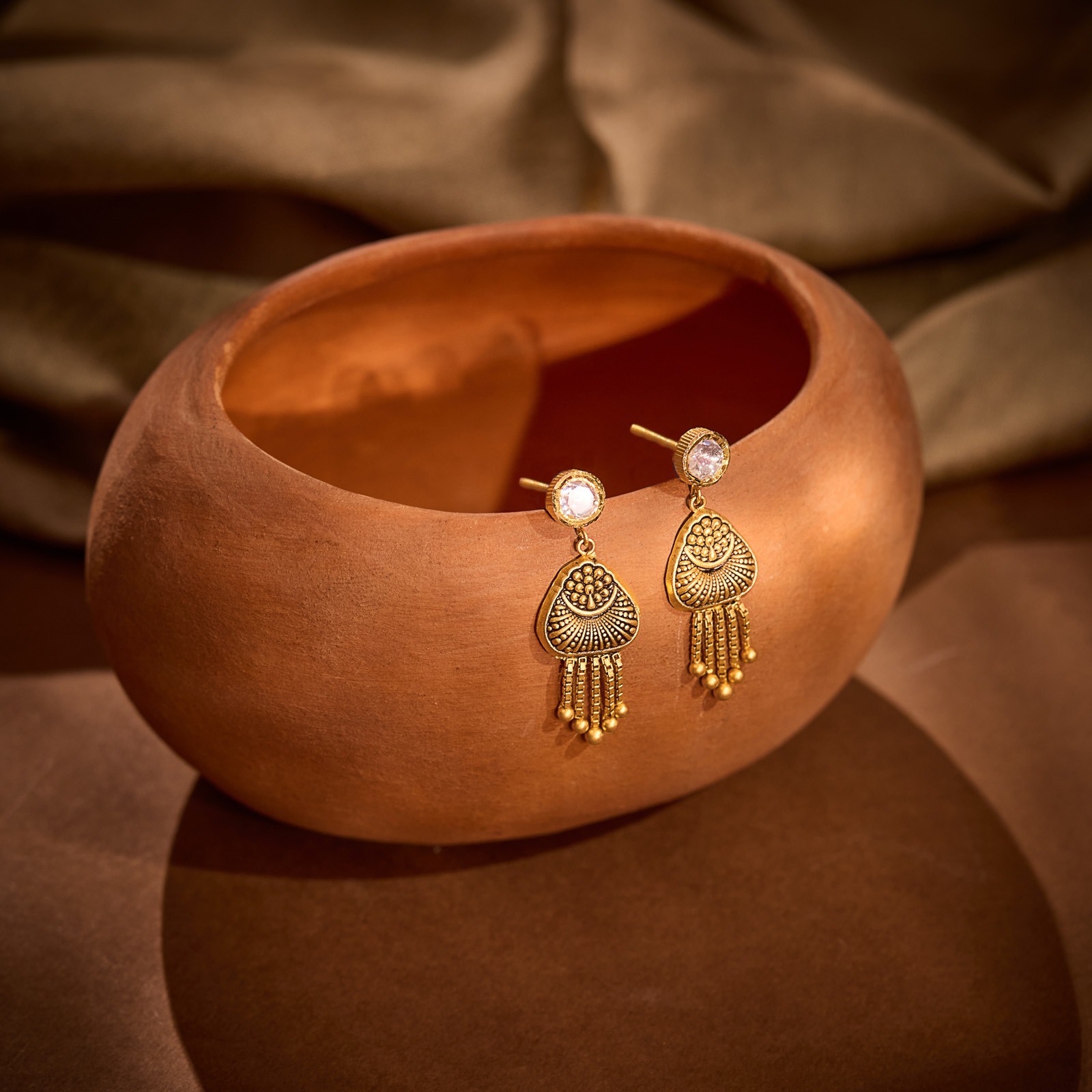
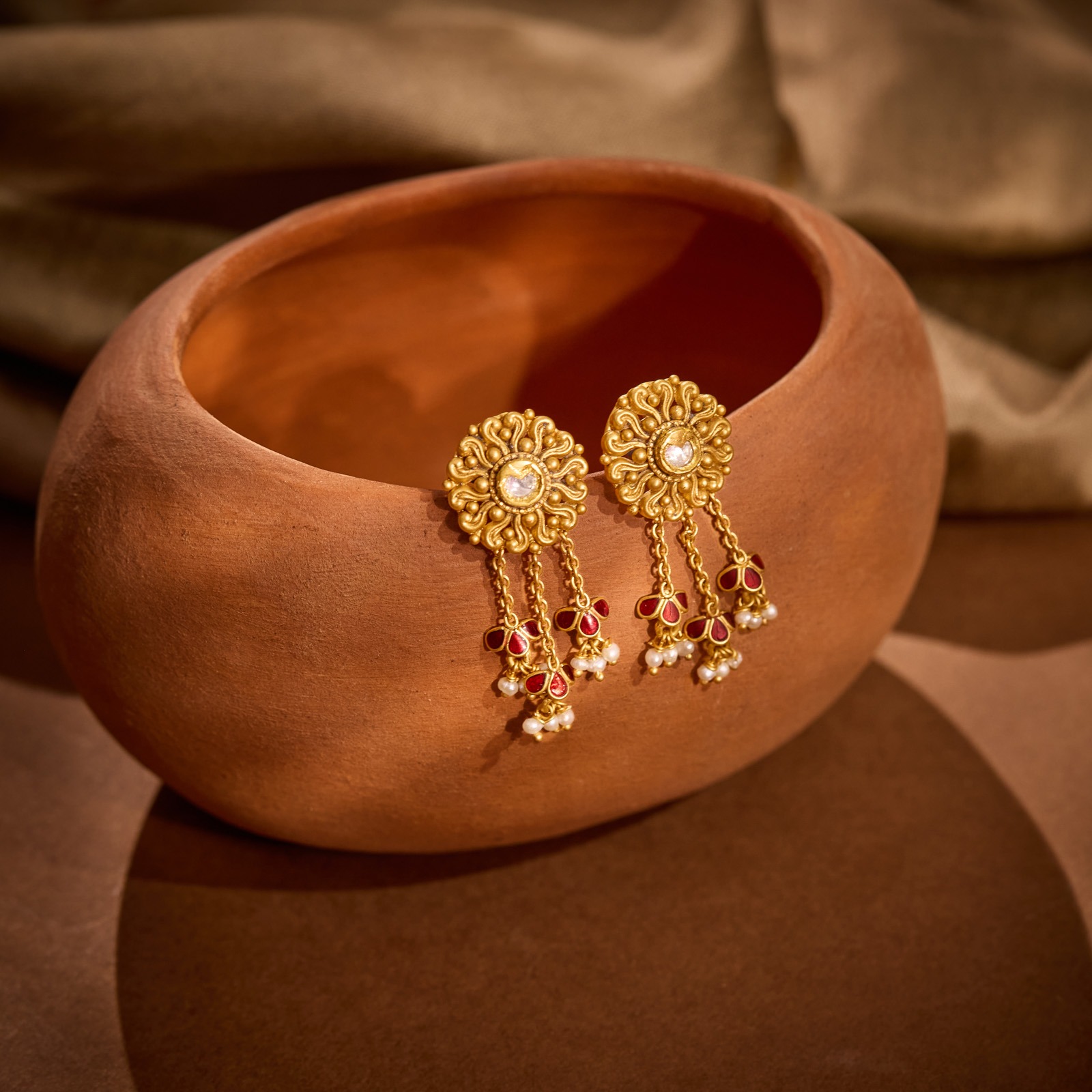
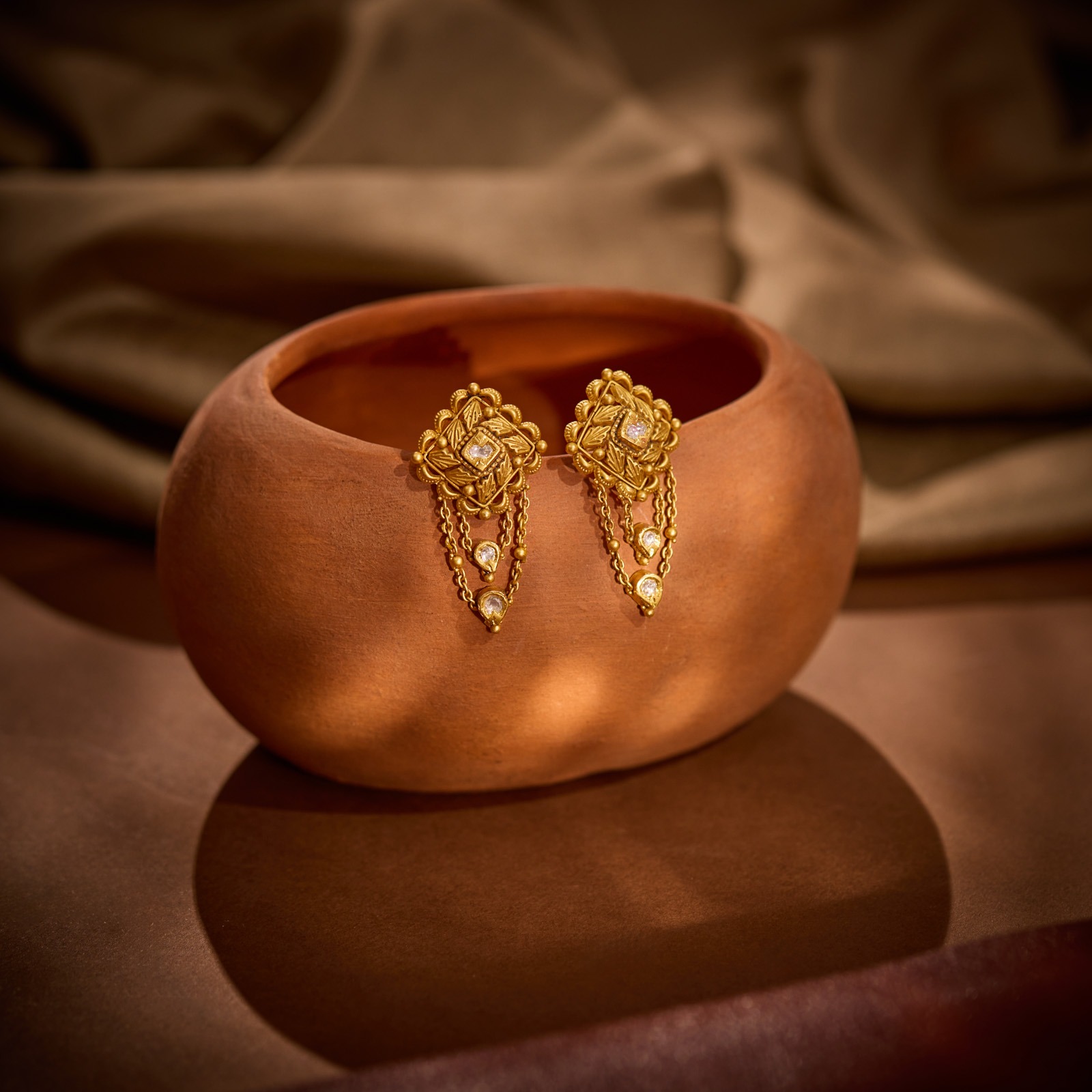
Polki is not a budget alternative to diamonds. It is diamonds, just as nature made them. Uncut, unpolished, retaining the natural character of the stone. Set in gold using traditional methods, polki diamonds catch light differently from their faceted counterparts: warmer, more diffused, more organic. Each stone is unique because no two uncut diamonds are identical. This is jewellery that cannot be mass-produced because the raw material itself refuses standardisation.
Kundan is the technique that holds it all together. One of India’s oldest jewellery-making traditions, originating in the royal ateliers of Rajasthan and Gujarat, kundan involves setting stones into a framework of refined pure gold foil — no prongs, no claws. The gold is worked around the stone until it holds without gripping, creating a seamless surface where stone and metal appear as one continuous material.
Zardozi anchoring, the technique of embedding stones directly into fabric using metallic threadwork, is what integrated the jewellery into the garment itself. The blouse was not decorated with jewellery. The jewellery was woven into its construction.
The result was a garment that functioned as both textile and treasure, inseparable from the stones it contained.
Explore CaratLane’s polki collection.
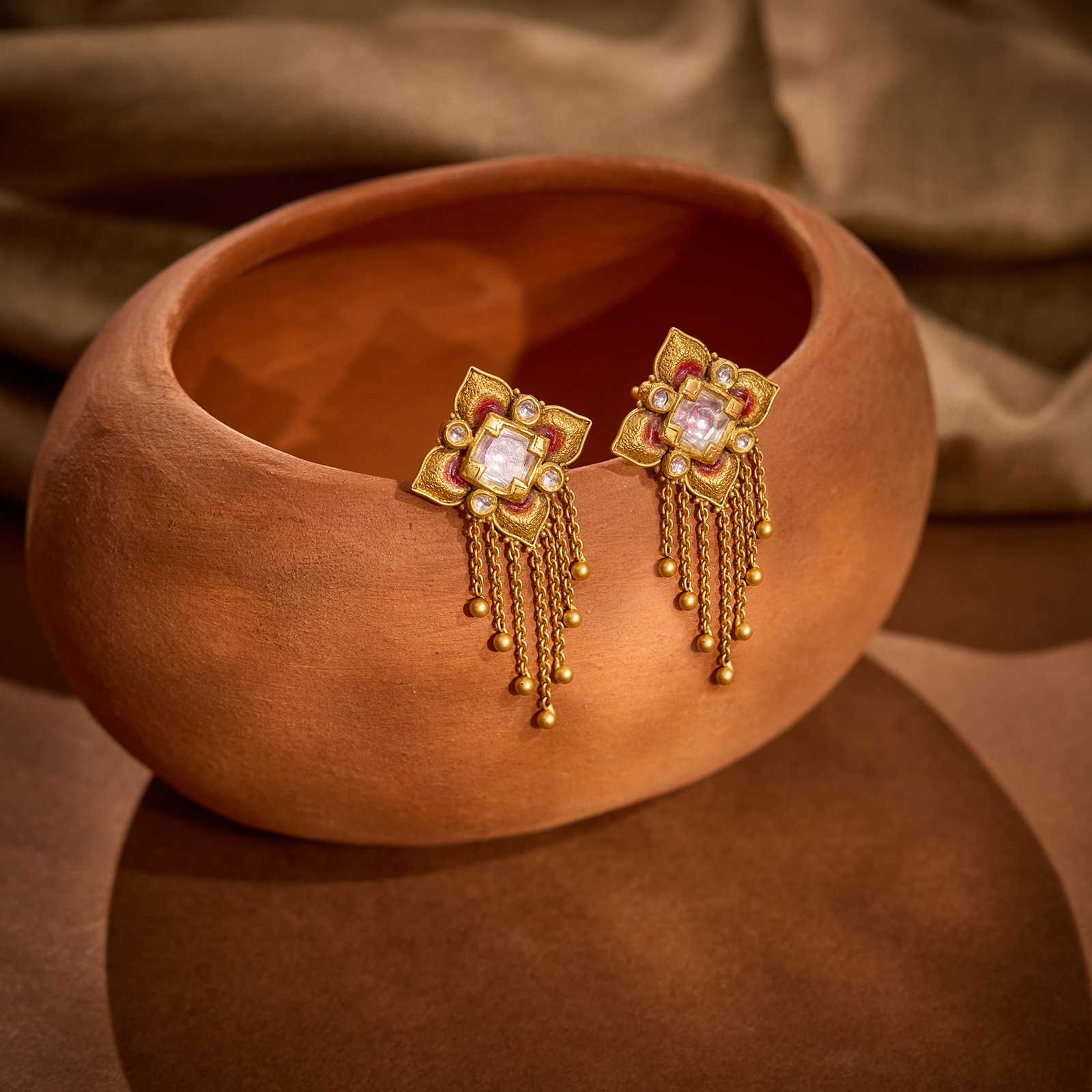
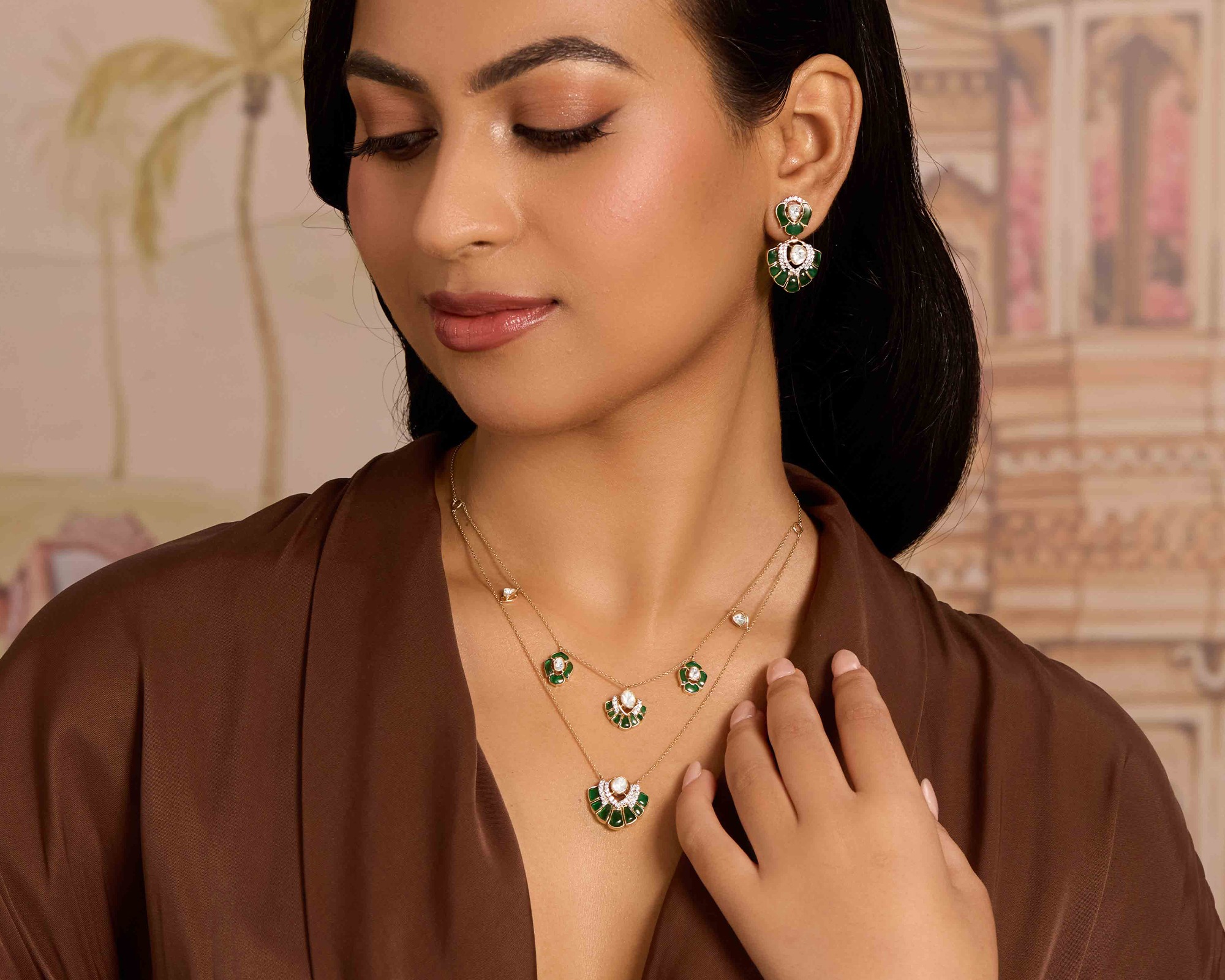
The Layered Diamond Necklaces: Old Mine-Cut Diamonds and a 50-Carat Emerald
A set of layered necklaces from Nita Ambani’s personal collection featured over 150 carats of old mine-cut diamonds, including one anchored by a striking 50-carat emerald from Lorraine Schwartz.
Old mine-cut diamonds are an antique cutting style — the predecessor to the modern brilliant cut. They have a higher crown, a smaller table, and a larger culet than contemporary cuts. The effect is a diamond that glows rather than blazes: a candlelight quality, romantic and warm, more associated with the light of drawing rooms than the halogen of jewellery stores. These stones were cut for a different era’s light sources, and in doing so, they carry that era with them.
A 50-carat emerald is rare in the way that certain words are rare: the concept exists, but encountering it in reality is another matter entirely. Most significant emeralds in private collections are 5 to 15 carats. A 50-carat gem-quality stone from Lorraine Schwartz, one of the world’s most respected sources of high jewellery, is the kind of object that needs no explanation. Its presence in a look that already contains 1,800 carats is still what commands a second look.
As Adajania described the necklaces: they fall “in layered drapes that reflect a distinctly Indian sensibility of adornment, rich, cascading, and inherently expressive.”
Layering is not a Western styling trick applied to Indian jewellery. It is indigenous to how Indian women have always worn their finest pieces — the neck as a canvas for accumulated meaning, each layer adding to rather than competing with what came before.
Explore layered necklace sets on CaratLane.
The Haathphool: Indian Hand Jewellery That the World Noticed
The adornment did not stop at the necklace. It extended — across the waist, across the hands — in the full traditional vocabulary of Indian bridal and royal jewellery.
A haathphool is one of the most distinctive pieces in the Indian jewellery canon: hand jewellery that extends across the back of the palm, connecting wrist to finger rings in a single ornamental piece. The word translates literally as “flower of the hand.” It has been worn by Indian brides and queens for centuries, and it was on Isha Ambani’s hands at the Met Gala.
Diamond haathphools, alongside a diamond waist belt, extended the jewellery from the neck to the waist to the hands in a continuous way, reflecting how traditional Indian adornment has always understood the body: not as a collection of separate styling zones but as a single surface for expression.
For anyone encountering it for the first time, the haathphool reframes what adornment can mean, not an accessory added to a look, but an extension of the body itself.
Explore bridal and hand jewellery on CaratLane.
The Sarpech: A Mughal Relic That Belonged to the Nizam of Hyderabad
At the back of Isha’s saree was a sarpech, a traditional jewelled ornament once worn on a turban, originally owned by the Nizam of Hyderabad. The piece included antique emerald beads and rose-cut and table-cut diamonds, set using the traditional kundan technique. The reverse side featured intricate meenakari enamelwork.
The sarpech is a Mughal jewellery form that dates from the 16th century: a jewelled ornament worn at the front of the turban to signify royal status. The word comes from sar (head) and pech (fastener). The Nizams of Hyderabad, among history’s wealthiest rulers, accumulated one of the most significant jewellery collections the subcontinent has ever seen. A sarpech from that collection is not a piece of jewellery in the conventional sense. It is a historical document set in gold and stones.
Placed at the back of the blouse, not on a head, not on a turban, but recontextualised into the construction of a garment, the sarpech became something else entirely. A royal object, displaced from its original function and placed somewhere new, without losing any of its authority.
The world needed a Mughal sarpech moment on a global fashion stage. Isha delivered.
Explore heritage-inspired jewellery on CaratLane.
The Jasmine Hair Sculpture: Where Art and Jewellery Blur
A delicate jasmine-inspired hair sculpture reimagined the traditional mogra paranda and gajra. Created over 150 hours by Brooklyn-based artist Sourabh Gupta, each element, crafted from paper, copper, and brass, was individually handmade and painted with Indian pigments.
This is where the “Fashion is Art” theme lived most literally in the look. In the paper flowers made by hand, each one is a reimagining of the gajra that Indian women have worn in their hair since time immemorial.
The Jewellery Trends Isha Ambani Brought to the Global Stage — And How to Wear Them
You don’t need 1,800 carats to wear this aesthetic. Here is how to bring it home.
Four trends from Isha’s look that are already accessible, because they have always existed in Indian jewellery, and the rest of the world has simply caught up.
Trend 1: The Layered Necklace Stack
Layering is having its global moment, but it has been a standard in India for centuries. Two or three necklaces at different lengths, a choker close to the throat, a longer pendant dropping to the collarbone, a chain falling further still, create the cascading, expressive quality that Adajania described as distinctly Indian sensibility.
Start with a minimal gold chain and add a pendant necklace. The aesthetic is immediate and entirely wearable. Explore layered necklace sets at CaratLane.
Trend 2: Coloured Centre Stones — Emerald, Sapphire, and Beyond
The 50-carat emerald was the centrepiece that every camera found. Coloured stones as focal points — particularly deep greens, rich blues, and warm reds — are the alternative to the all-white diamond look that has dominated fine jewellery for decades. They carry personality, provenance, and a warmth that colourless stones cannot replicate.
Explore gemstone jewellery at CaratLane.
Trend 3: Hand Jewellery and the Haathphool
Hand jewellery beyond the bangle and the ring is having a significant moment globally. The haathphool was introduced to an international audience, which immediately wanted to know its name. For brides and occasion dressers in India, this is a return to a form that has always belonged here. Explore bridal accessories at CaratLane.
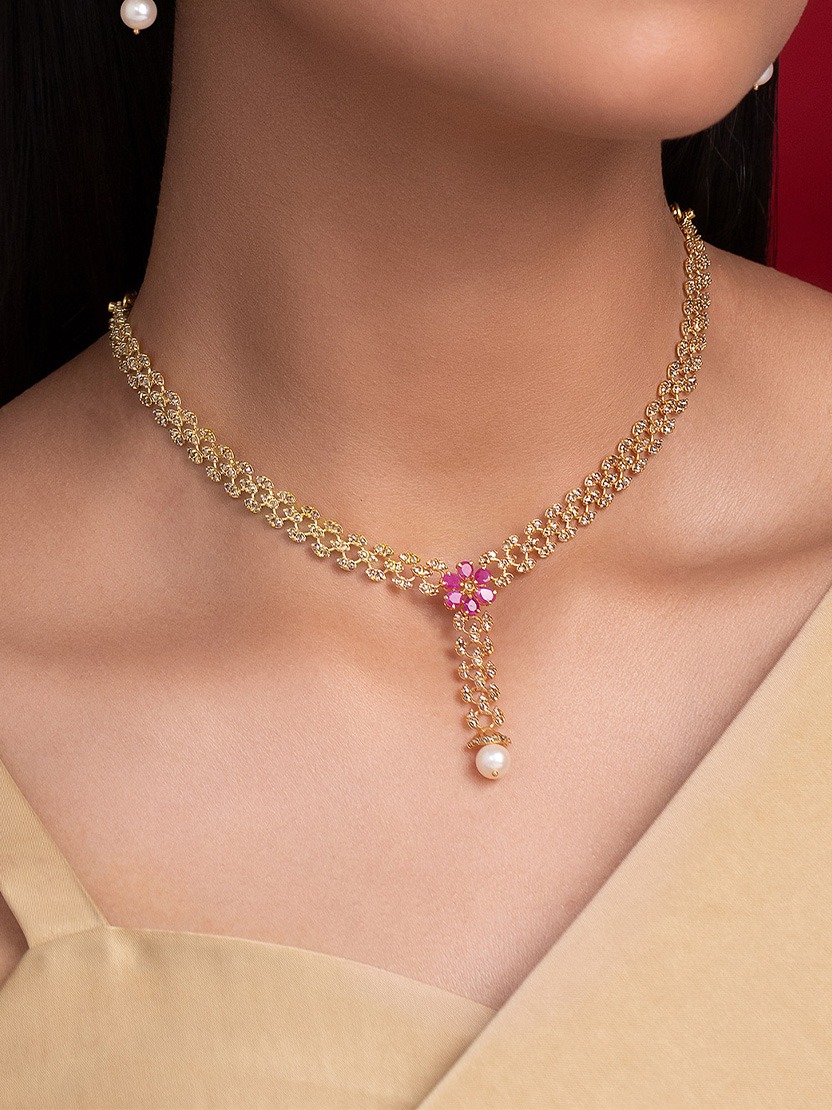
Trend 4: Heritage-Inspired Artisan Jewellery
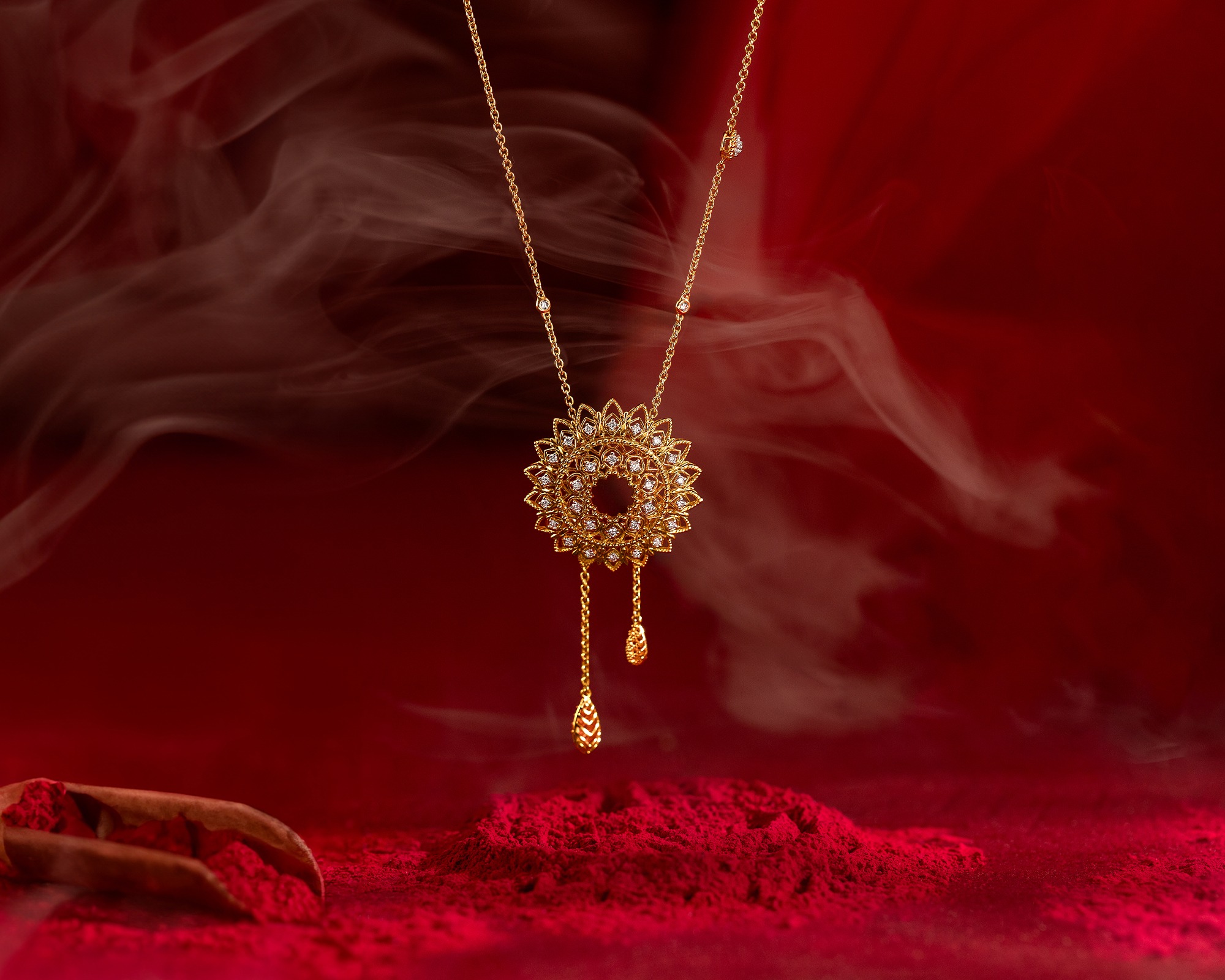
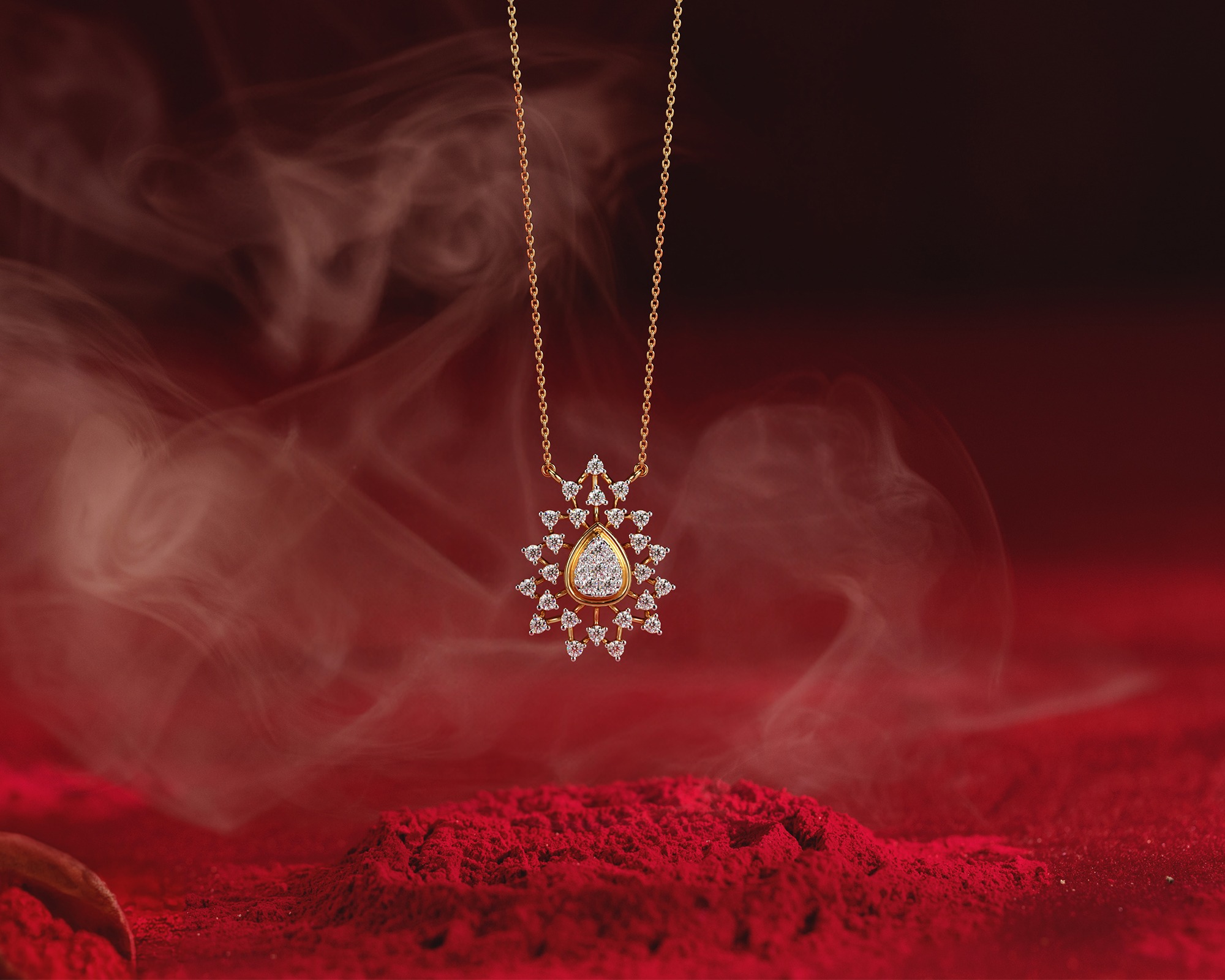
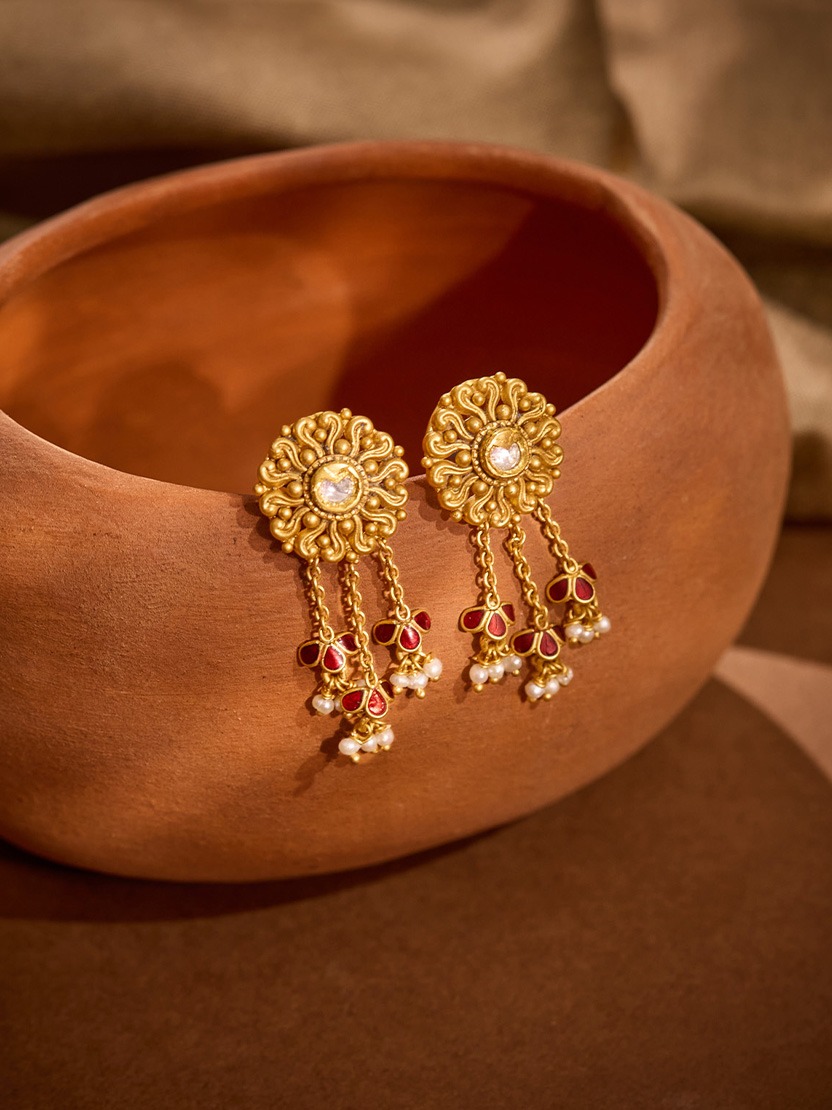
The polki blouse, the kundan sarpech, the zardozi anchoring — all of these are techniques that have existed for centuries and are now being recognised globally as the original luxury. Not ethnic alternatives to fine jewellery. Fine jewellery, in its oldest and most considered form. CaratLane’s Polki collection brings this heritage into contemporary, wearable form:
Why This Look Was More Than Fashion: A Statement About Indian Craftsmanship
Polki is not a trend. Kundan is not ethnic jewellery. Zardozi is not embroidery. Meenakari is not decoration.
These are techniques developed over centuries by craftsmen who understood that the surface of an object is where meaning lives, that the way a stone is set communicates something about the value placed on it, that the reverse of a piece matters as much as the front, and that invisible work is still real work.
Indian jewellery reached its highest technical expression in royal courts, where cost was not a constraint and time was not a limitation. The traditions that developed there, polki setting, kundan technique, and meenakari enamel, were not simplified or replaced when fine jewellery moved into the modern era. They were continued by specialist craftsmen who passed knowledge to apprentices in workshops in Jaipur, Hyderabad and Mumbai.
What Isha Ambani’s Met Gala 2026 look did was place those traditions on the most photographed carpet in fashion, in front of every camera and every conversation that matters to global style. It said, “This is not regional.” This is not historical. This is the original luxury, and it requires the world to redefine fine jewellery.
CaratLane’s commitment is the same, expressed at an accessible scale: jewellery made with intention, carrying meaning, built on craft traditions that deserve to be worn rather than preserved behind glass.
Get the Look: Isha Ambani-Inspired Jewellery on CaratLane
The pieces. The collections. The accessible version of a 1,800-carat moment.
- For the warm, organic glow of uncut diamonds in gold — the texture that defines heritage jewellery at its most distinctive — CaratLane’s Polki collection is where to begin.
- The cascading necklace layering that defined Isha’s neckline finds its accessible equivalent in CaratLane’s layered necklace range, where layered and pendant styles sit side by side.
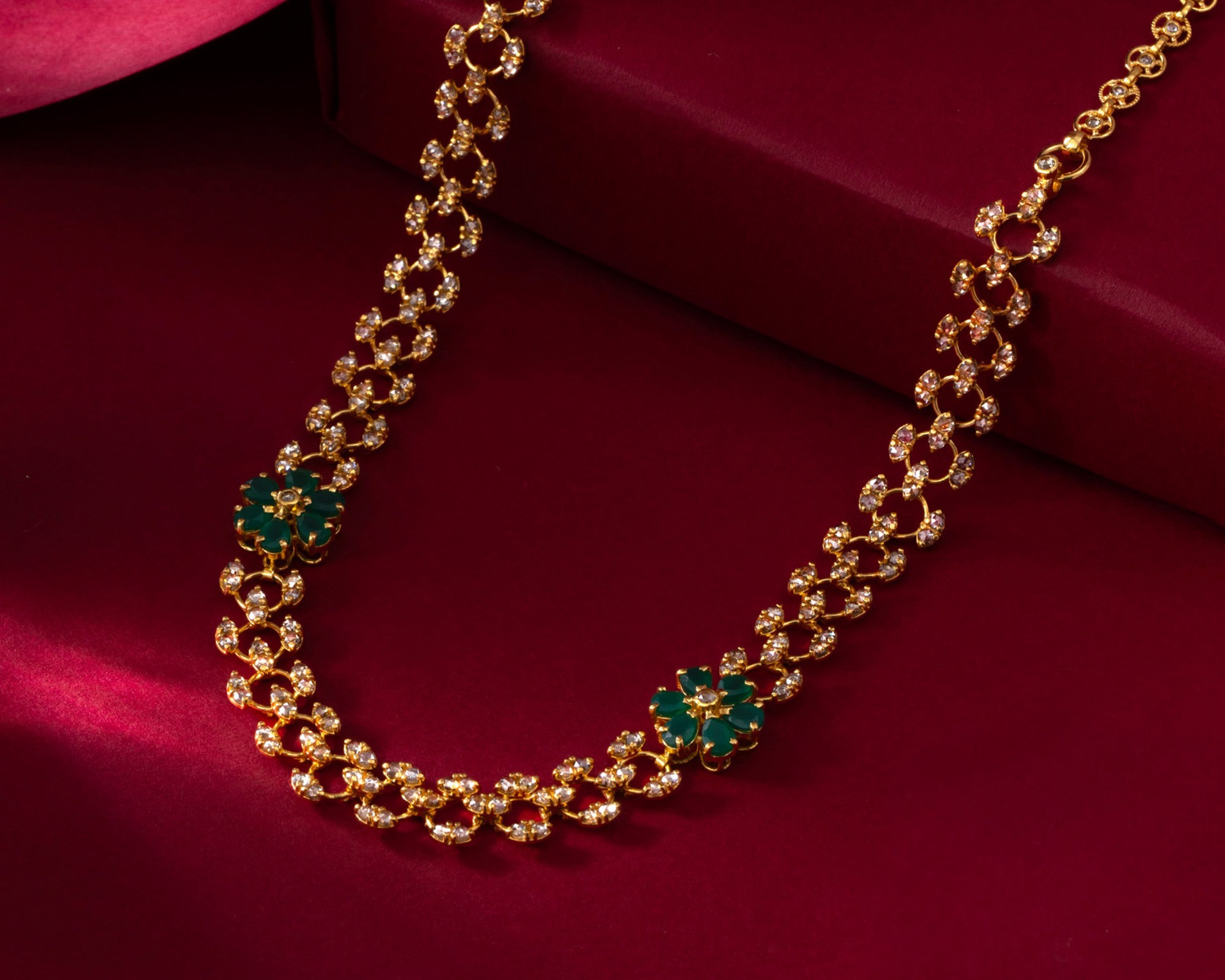
- For the coloured centre stone moment — the deep green, the rich blue, the stone that anchors everything around it — CaratLane’s gemstone jewellery collection carries exactly that energy.
- The full heritage-inspired occasion look, from statement necklaces to bridal accessories, lives in CaratLane’s bridal collection.
- And for the brilliance that runs through all of it — the natural diamonds that make every other element possible — CaratLane’s diamond jewellery range.
Because jewellery is not just what you wear, it is what you carry forward.
FAQs
- What jewellery did Isha Ambani wear at the Met Gala 2026?
Isha Ambani wore over 1,800 carats of diamonds and emeralds at the Met Gala 2026 — including old mine-cut diamonds, polki (uncut natural diamonds), and a 50-carat emerald as the centrepiece of her layered necklaces. Her jewellery-embedded bodice featured over 200 hand-sewn diamonds with zardozi embroidery. At the back of her blouse sat a historic Mughal sarpech set in the kundan technique, with antique emerald beads and rose-cut and table-cut diamonds. Diamond hand jewellery and a diamond waist belt completed the look.
- What is polki jewellery, and how is it different from regular diamond jewellery?
Polki jewellery uses uncut, natural diamonds in their raw form — not faceted like modern brilliant-cut diamonds. Set in gold using traditional techniques, polki diamonds have a warm, organic glow rather than a sharp sparkle. The style originates from Mughal India and is central to royal and bridal jewellery traditions. Each polki stone retains the diamond’s natural character, making every piece genuinely unique. Polki is not an alternative to diamonds. It is diamonds — just as nature made them.
- What is a sarpech, and why did Isha Ambani wear one at the Met Gala?
A sarpech is a jewelled ornament traditionally worn on the front of a Mughal or Rajput turban — a royal identifier in the truest sense. Isha Ambani’s sarpech, placed at the back of her blouse, originally belonged to the Nizam of Hyderabad. Dating to the Mughal era, it featured antique emerald beads and rose-cut and table-cut diamonds in a kundan setting, with meenakari enamel work on the reverse. By wearing it unconventionally, she recontextualised a royal relic for a global fashion moment without diminishing its authority.
- What is the kundan jewellery technique seen in Isha Ambani’s Met Gala look?
Kundan is one of India’s oldest jewellery-making techniques, originating in Rajasthan and Gujarat. It involves setting gemstones into a base of refined pure gold foil without using prongs or claws — the gold is worked around the stone until it holds seamlessly. The result is a surface where stone and metal appear continuous. Isha Ambani’s look featured a kundan setting on the historic Nizam’s sarpech and across the jewellery-embedded blouse. Kundan pieces are traditionally associated with bridal and ceremonial wear, and now, with the Met Gala red carpet.
- How can I get a jewellery look inspired by Isha Ambani’s Met Gala style?
Start with the principles rather than the carats. Layer two necklaces at different lengths — a shorter pendant and a longer chain. Choose one piece with a coloured stone: an emerald green or deep blue reads most powerfully against both ethnic and western outfits. Add a polki-inspired piece for the warm, organic texture that distinguishes heritage jewellery from contemporary minimalism. For occasions, a hand jewellery piece or a statement bridal accessory brings the full aesthetic into focus. CaratLane’s polki, gemstone, and bridal collections feature pieces that honour exactly this aesthetic — at a scale that belongs to real life rather than the Met Gala.
Suggested Reading:
Heera Har Heere Ke Liye: Why Every Woman Deserves a Real Natural Diamond